In a February 2025 analysis, the environmental charity WRAP estimated that four out of five repaired items displaced the purchase of a new item in the contexts studied. This finding points to one practical way to keep clothing in use: repair pieces you already own before replacing them. Rather than buying continuous streams of short-lived fashion items, many shoppers favor understated pieces they can wear repeatedly. This practice can form the basis of a quiet luxury wardrobe.
Quiet luxury is a style description, not a regulated category or a rigid formula. It is often associated with simplicity and understated design, but the specific pieces, colors, and number of garments are personal choices. When you assemble a capsule wardrobe around this idea, choose a manageable selection of interchangeable clothes that suit your daily schedule. Focus on whether you will wear each item often, whether it fits comfortably, and whether its care requirements work for you. Building this type of collection requires patience, attention to labels, and consistent care.
Understanding the Philosophy of Understated Wardrobes
The idea of quiet luxury centers on understated design and practical usability. Rather than treating a particular trend list as essential, consider which clothes suit your routine and are likely to remain in use. A capsule wardrobe can help organize those choices, but it does not need to follow a fixed formula.
A subdued color palette may help some people combine their clothes, but there is no universally best palette. Choose colors and combinations that suit your preferences and the clothes you already wear. A useful capsule is personal: its purpose is to make getting dressed easier, not to meet a prescribed standard.
To build a functional wardrobe under this philosophy, separate marketing narratives from evidence about a garment. A high price tag or prestigious designer label does not automatically guarantee that an item will endure daily use. The Ellen MacArthur Foundation notes in its fashion deep dive that there are currently no industry standards for assessing garment durability. Because “luxury” is not a standardized durability rating, shoppers can consider a garment’s fit, construction, care requirements, and likely use rather than relying on branding alone.
Assessing Durability and Construction Quality
A long-lasting wardrobe depends in part on choosing clothes you can and will keep wearing. In a 2026 report produced with the University of Leeds’ Leeds Institute of Textiles and Colour, WRAP described a standardized evidence base for measuring clothing durability. It drew on tests of more than 200 garments and 10,000 specimens. The report supports a more consistent way to assess durability; it does not mean that a particular label or price guarantees that an individual garment will last.
When examining garments, consider the following before making a purchasing decision:
- Construction: Look closely at the garment and its seams, fastenings, and finish. Consider whether the item appears suited to the way you plan to wear it.
- Fit and comfort: Try the garment on, if possible, and consider how it feels when you move. A classic cut, good fit, and built-in adjustability can help clothes stay in use longer, according to WRAP’s clothing guidance.
- Durability claims: Do not assume that words such as “premium” or “luxury” prove a garment will last. Durability depends on the particular garment, its use, and its care.
Reading Fiber and Care Labels Accurately
Fiber composition is useful information when comparing what garments are made from. In the United States, most covered textile and wool products must disclose fiber content, country of origin, and the responsible business. The Federal Trade Commission’s consumer guidance on apparel labeling explains these disclosure requirements.
Look at the labels before buying:
- Fiber content: Check the stated fibers and percentages to understand what a garment is made from. The label can help you compare items, but it does not by itself establish how long a particular garment will last.
- Care instructions: Consider whether the listed care fits your routine. Requirements that are inconvenient for you may make a garment less practical to wear often.
- Country of origin and responsible business: For covered products in the United States, these details are among the required disclosures.
Alongside fiber content, care instructions should influence your wardrobe choices. Under the FTC’s care labeling rule, covered apparel manufacturers and importers must provide regular-care instructions. If an item’s care requirements do not fit your routine or budget, it may spend more time in your closet than being worn. Treating maintenance as part of the purchasing decision helps keep a capsule practical.
Core Staples for a Versatile Capsule
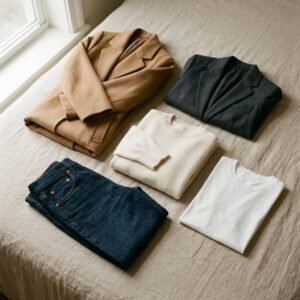
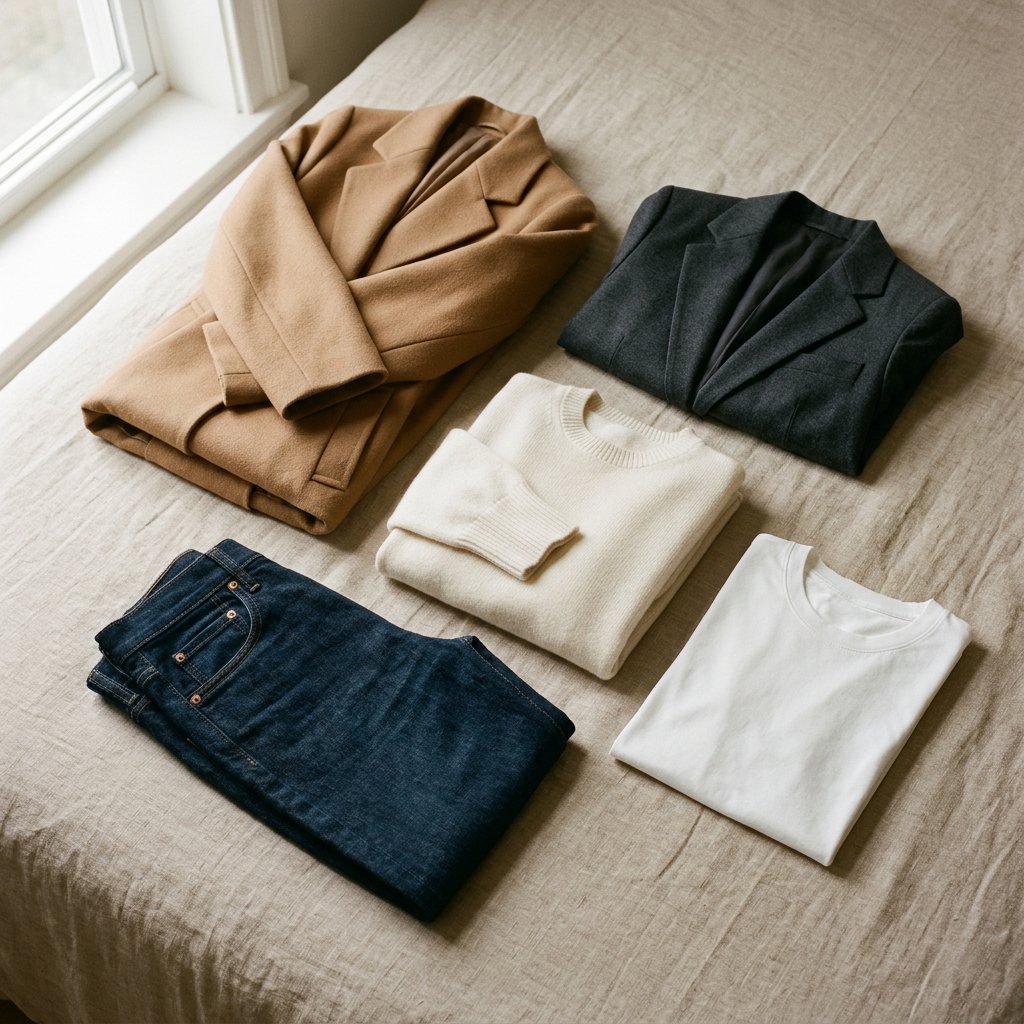
There is no universal formula or fixed garment count that works for everyone. The Ellen MacArthur Foundation gives examples of wardrobe essentials and staples, including coats, jumpers, jeans, T-shirts, socks, hosiery, and underwear. These are examples, not a required capsule list. Your wardrobe should reflect your climate, profession, and daily activities.
Tailored Outerwear
A coat or blazer can be a useful layer over outfits you already wear. Choose outerwear that suits your needs and feels comfortable when you move. Consider whether you will use it regularly and whether its care requirements are manageable.
Knitwear and Sweaters
Jumpers and other knitwear can serve as layers in a capsule wardrobe. Before choosing one, consider how it fits into your existing outfits, how comfortable it feels, and what its care label asks you to do.
Tailored Trousers and Everyday Denim
Trousers and jeans may be useful staples if they suit your routine. Choose cuts and fabrics you are comfortable wearing repeatedly, rather than buying a style simply because it is currently popular. Check the fit and care instructions before deciding.
Woven Shirts and Base Layers
Shirts and T-shirts can work as versatile layers when they fit your daily needs. Consider whether you will wear them often, whether they are comfortable, and whether their care requirements are practical for you.
Prioritizing Fit, Comfort, and Tailoring
Visual elegance relies in part on how an item fits and feels on you. WRAP’s 2016 research on clothing use identifies fit, comfort, classic cut, and adjustability as factors that can help people keep wearing clothes longer. These considerations may be more useful than buying a garment simply because it matches a trend.
If an item feels uncomfortable or restricts your movement, you may be less likely to reach for it. Try clothes on when possible and consider whether alterations could improve the fit. Tailoring can be an option when an otherwise useful garment needs an adjustment, but it is worth considering the cost and effort before buying.
Fit and comfort can also change over time. Keep your own needs in mind as you decide whether to alter, repair, or continue wearing a garment. A capsule wardrobe can evolve without requiring you to replace everything at once.
Maintaining and Preserving Garments Over Time
A capsule wardrobe is only as useful as the care routines you can maintain. Because a smaller selection of clothes may be worn repeatedly, follow the instructions on each garment’s care label and consider repair when a piece needs attention.
Laundering Techniques
- Follow the care label: Use the regular-care instructions provided for the garment. Care needs vary, so avoid assuming one method is suitable for every item.
- Consider your routine: Before buying, check whether the care instructions are practical for you. This can help you choose clothes you are more likely to wear and maintain.
- Seek advice when needed: If you are unsure how to care for a garment, consult its label or a suitable care professional rather than guessing.
Routine Maintenance and Storage
- Repair small problems: Address damage when practical, rather than waiting until it makes an item difficult to wear.
- Keep care manageable: Make garment care part of your regular routine in a way that works for the items you own.
- Use available support: Repair services and care advice can help preserve garments and keep them in use, as the Ellen MacArthur Foundation notes in its fashion deep dive.
The Role of Repair and Resale
Embracing understated style can also involve shifting away from unnecessary replacement. WRAP’s 2025 analysis estimated that four out of five repaired items displaced a new purchase in the contexts studied. Repair is not a guarantee that every item can be saved, but it is one option to consider before buying something new.
Basic repairs, such as sewing on a loose button or securing a fallen hem, may help keep a garment wearable. For more complicated work, consider whether a repair service is available and suitable. The right choice depends on the item, the repair needed, and your circumstances.
When you do choose to expand your collection, consider secondhand options as well as new purchases. You can also ask whether an existing item can be repaired or adapted before replacing it. By choosing clothes you are likely to wear, checking their labels and care requirements, and repairing them when practical, you can build a personal capsule wardrobe focused on repeated use and everyday comfort.