

Resale data indicates that high-grade leather goods and mechanical watches retain up to 80 percent of their original retail value after five years, while fast-fashion accessories lose nearly all financial value within thirty days. A minimalist wardrobe relies on small collections of dependable items instead of crowded closets filled with short-lived trends. When an individual keeps thirty to forty garments in their daily rotation, accessories perform the heavy lifting. They establish the tone of an outfit, provide polish, and allow basic garments to move across different personal and professional settings.
Choosing luxury items for a minimalist closet requires a distinct mindset. The goal is never to broadcast brand names or follow seasonal fads. Instead, it centers on acquiring items built from resilient materials with clean lines and unbranded surfaces. A single high-grade leather tote, a understated dress watch, and a fine belt can support dozens of clothing combinations across several years. Building this kind of collection requires patience, clear standards, and an understanding of genuine craftsmanship.
The Core Principles of Minimalist Luxury
Minimalism in fashion is often confused with plainness or casual simplicity. On May 31, 2023, a fashion analysis published by <a href="
83twFXyyR_VE0a_n-eSsT3KlZ5_lqBCX43khBLmsDNHAxhLTUBdcSZFyxBS94GmCmOEhI02jL3mun”>Farfetch pointed out that quiet luxury is fundamentally distinct from standard “normcore” or basic minimalism. The analysis defined quiet luxury specifically as an elevated modesty that relies on understated design, premium construction, and monochrome or neutral palettes rather than prominent logos. True minimalist luxury prioritizes intrinsic quality over superficial marketing.
To choose accessories that stand the test of time, evaluate every candidate piece against three fundamental criteria:
- Substance Over Branding: Reject items defined primarily by oversized hardware, monograms, or signature patterns. When an accessory loses its exterior insignia, its structural integrity, leather quality, and silhouette should still communicate its worth.
- Material Permanence: Prioritize full-grain calfskin, box leather, solid metals (such as 18-karat gold, platinum, or high-grade 316L stainless steel), hand-rolled silk, and combed cashmere. These materials do not deteriorate after regular use; instead, they develop an attractive patina.
- Geometric Clarity: Minimalist styling works because clean lines harmonize with diverse garment cuts. Look for architectural rectangles, subtle curves, and balanced proportions that do not fight with tailored coats, knitwear, or casual trousers.
1. The Architectural Everyday Bag
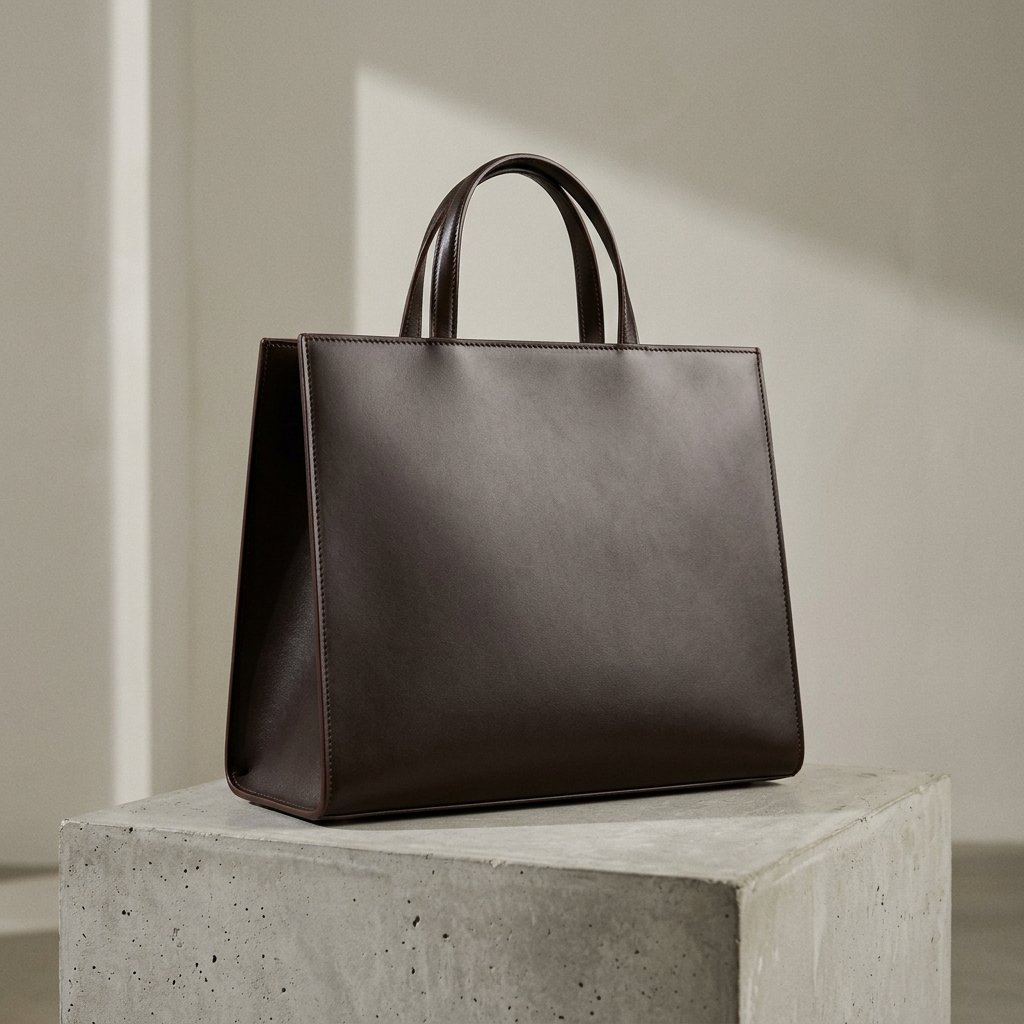
In a minimalist collection, one or two luxury bags replace an entire shelf of seasonal alternatives. The most versatile choice is an unembellished, structured leather tote or top-handle bag in black, deep taupe, or dark espresso.
Structural Considerations
When a bag features zero exterior branding, its structure becomes the focal point. Soft, slouchy totes often collapse over time and read as overly casual in professional settings. In contrast, an architectural tote built with edge-painted finishes and an internal bonded lining holds its shape whether it is completely full or nearly empty.
Look for bags crafted from vegetable-tanned or box calf leather. While these leathers require occasional conditioning, their tight grain resists moisture and scratches far better than lower-grade, heavily coated split leathers. Hand-stitched saddle seams provide additional peace of mind: if a single thread breaks, the remaining stitches stay locked in place, ensuring the piece can be repaired by an artisan rather than discarded.
Interior Functionality
A minimalist bag should not sacrifice internal order for external simplicity. The best luxury designs include subtle, dedicated leather sleeves for documents or laptops, flat zip compartments for valuables, and robust base studs to protect the leather when placed on floors or tables.
2. The Classic Mechanical or Quartz Dress Watch
A watch is often the single most visible accessory in a minimalist wardrobe. Because smartphones provide digital timekeeping, a wrist-worn timepiece serves primarily as an expression of personal taste, structural balance, and fine engineering.
Proportion and Metal Choice
Minimalist watches work best when their case diameters remain moderate—typically between 34mm and 39mm for traditional dress proportions. Oversized cases and busy chronographs disrupt clean silhouettes and snag on tailored shirt cuffs.
- Dial Simplicity: Seek dials featuring plain sunburst finishes, enamel, or subtle textures. Dials with simple applied indices or thin baton hands outlast busy, multi-subdial layouts.
- Case Profile: A slim case thickness (under 9mm) allows the watch to slide comfortably beneath knitwear and blazer cuffs without creating awkward fabric bunching.
- Strap Versatility: A timepiece paired with an interchangeable alligator, calfskin, or fine Milanese mesh strap offers incredible versatility. Switching from a black leather strap to a caramel suede or steel band transforms a dress watch into an everyday companion.
High-grade stainless steel remains the practical benchmark for daily wear due to its scratch resistance and neutral color tone, while yellow or rose gold delivers warmth that pairs seamlessly with camel, cream, and earth-toned wardrobes.
3. The Refined Leather Belt
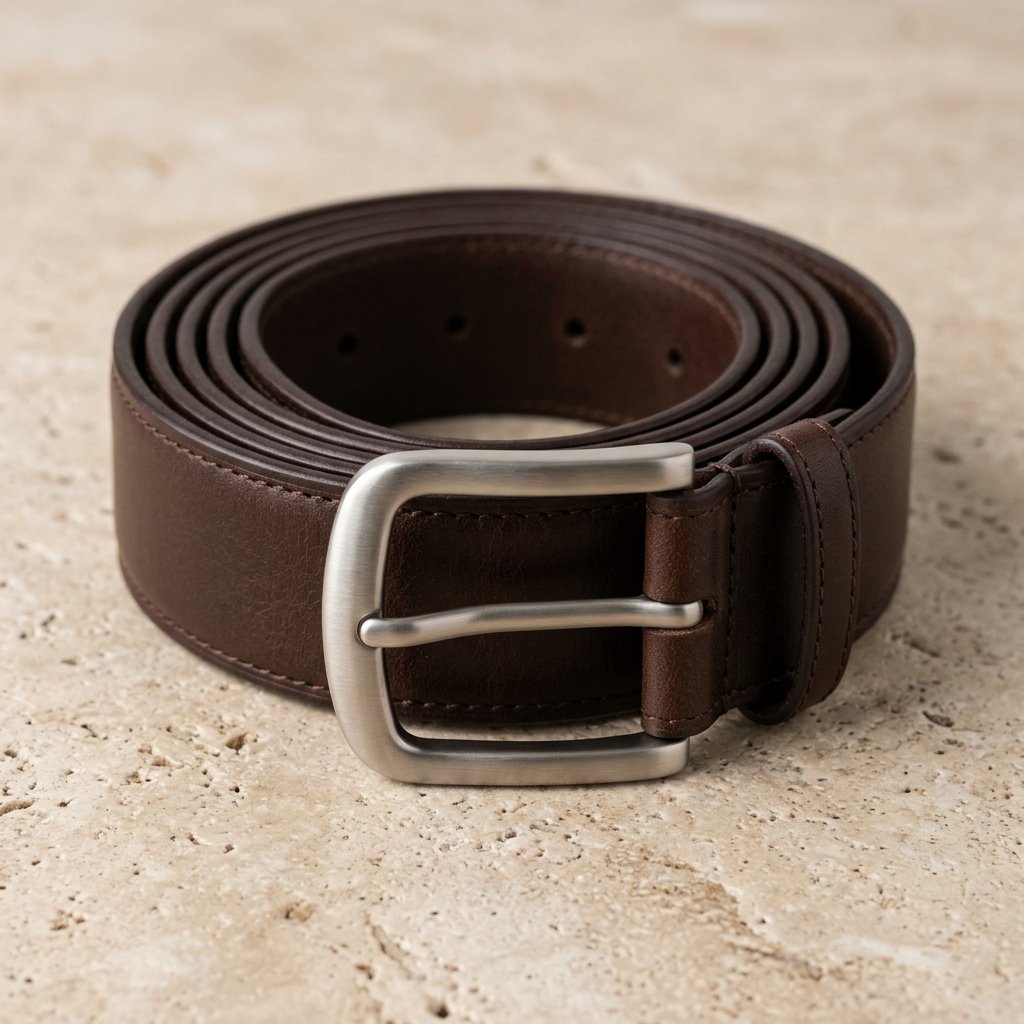
A belt is not merely a utilitarian tool to secure trousers; it acts as the visual divider that balances proportions between tops and bottoms. In a minimalist wardrobe, a poorly constructed belt immediately cheapens an otherwise polished outfit.
Hardware and Leather Grades
Avoid reversible belts that rely on hollow swivel buckles, as these mechanical joints frequently loosen or snap. Instead, select solid-brass or stainless-steel buckles with hand-brushed, palladium, or matte finishes. Bright, mirror-polished chrome buckles tend to show fingerprints and micro-scratches almost immediately.
- Width Standards: A width between 2.5 and 3.0 centimeters represents the universal sweet spot. It sits comfortably in the loops of tailored trousers, dark denim, and wool skirts without feeling excessively wide or dainty.
- Edge Finishing: Check that the edges are bevelled and sealed with multiple layers of edge paint rather than simply folded over and stitched. Folded edges fray quickly under the tension of a buckle prong.
- Leather Finish: A smooth box calf or lightly pebbled bridle leather ensures years of service without cracking around the adjustment holes.
4. The Tailored Loafer or Low-Profile Derby
Shoes anchor an outfit, dictating whether minimalist basics read as deliberate and elegant or plain and unfinished. Investing in high-end footwear made with traditional construction techniques pays dividends over decades.
Goodyear-Welted and Blake-Stitched Soles
Mass-market shoes are almost universally cemented (glued) together. Once the sole wears thin or separates, the shoe must be discarded. Luxury footwear utilizes Goodyear-welted or Blake-stitched methods, allowing cobblers to strip away worn outsoles and attach new leather or Vibram soles indefinitely.
A sleek penny loafer, horsebit loafer with subtle hardware, or plain-toe derby in dark burgundy or black bridges the gap between formal tailoring and casual weekends. When paired with selvedge denim, a white poplin shirt, or a pleated wool trouser, a refined leather shoe unifies the entire look.
5. Pure Silk Carré and Fine Cashmere Scarves
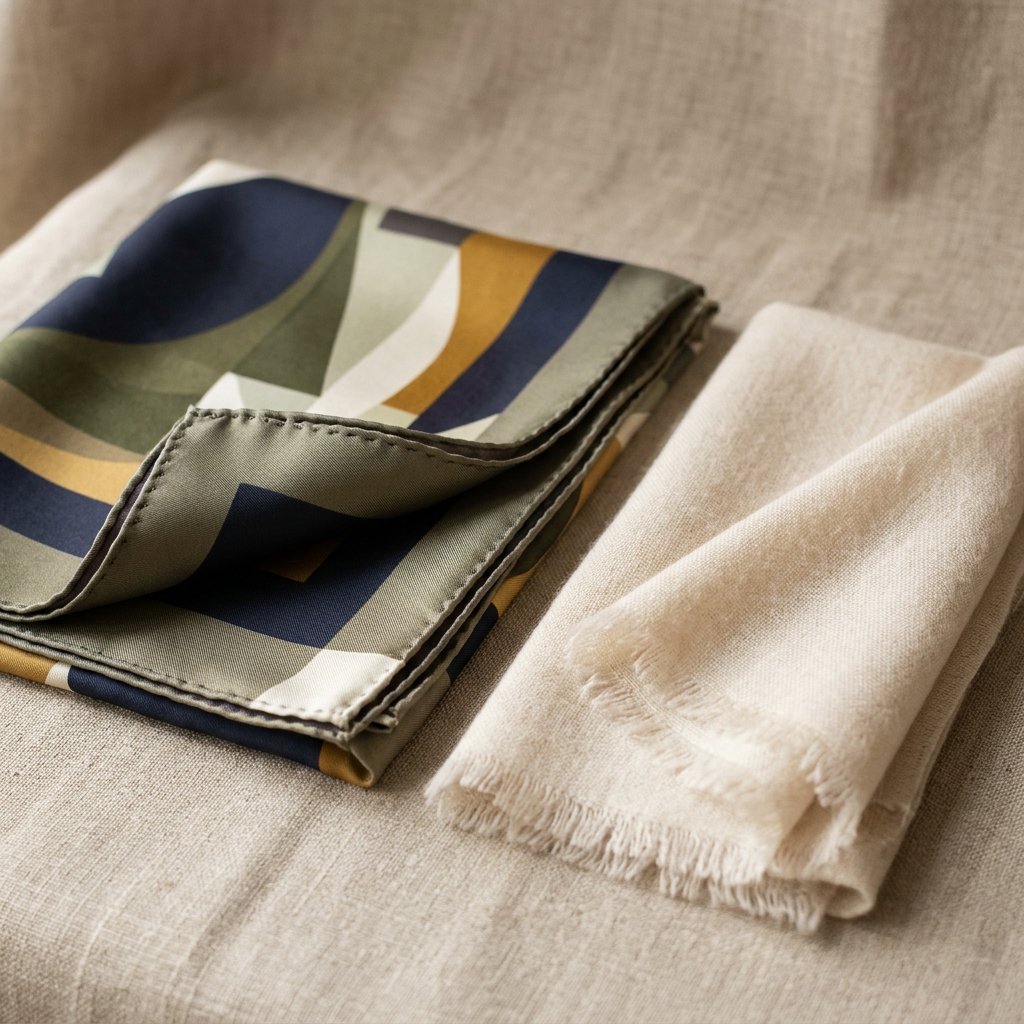
Textiles bring movement, tactile contrast, and soft layering to a wardrobe composed of crisp cottons and structured wools. Because minimalist outfits rely on limited color stories, subtle shifts in texture are essential to keep outfits visually engaging.
The Mulberry Silk Square
A 70cm or 90cm square scarf made from heavyweight mulberry twill (at least 14 to 16 momme) provides instant versatility. Rolled and hand-hemmed edges are the definitive hallmark of luxury production, taking skilled artisans up to forty-five minutes per scarf to stitch.
- Styling Versatility: A silk scarf can be knotted neatly around the neck inside an open-collar shirt, tied to the handle of a leather tote to add a pop of tonal color, or worn around the hair on windy days.
- Color Guidance: Neutral geometrics, architectural prints, or rich monochrome silks in forest green, navy, or cream offer visual interest without conflicting with everyday clothing.
Worsted Cashmere Wraps
For cooler seasons, a lightweight, woven cashmere wrap replaces bulky synthetic scarves. Premium cashmere collected from the underfleece of Capra hircus goats provides immense warmth with almost zero bulk. A neutral oatmeal, charcoal, or camel wrap can be draped over an overcoat, worn indoors as an elegant shoulder wrap, or rolled compactly inside a tote during travel.
6. Curated Eyewear and Understated Fine Jewelry
The face is where every conversation begins, making eyewear and subtle jewelry high-impact investment areas.
Handcrafted Acetate and Titanium Frames
Ditch injection-molded plastic sunglasses that warp under heat. High-end eyewear uses cured cellulose acetate or Japanese titanium. Acetate is hand-polished, hypoallergenic, and can be heated and adjusted by an optician to fit the contours of your face perfectly.
Classic wayfarer, rounded panto, or clean rectangular frames in black, deep tortoiseshell, or champagne crystal transcend seasonal eyewear trends and complement any face shape.
Everyday Fine Jewelry
Minimalist jewelry should integrate into your life so seamlessly that you rarely take it off. Rather than collecting trays of plated costume pieces that tarnish within months, curate three to five solid precious-metal pieces:
- A solid 14k or 18k gold band or signet ring
- A pair of substantial gold huggie hoops or round pearl studs
- A delicate box-chain or cable-chain necklace that rests at the collarbone
- A sleek, hinged metal cuff or tennis bracelet with bezel-set stones
Because these items are made from solid alloys rather than brass with thin flash plating, they withstand daily showers, handwashing, and skin friction without discoloration.
Investment Strategy: The Cost-Per-Wear Formula
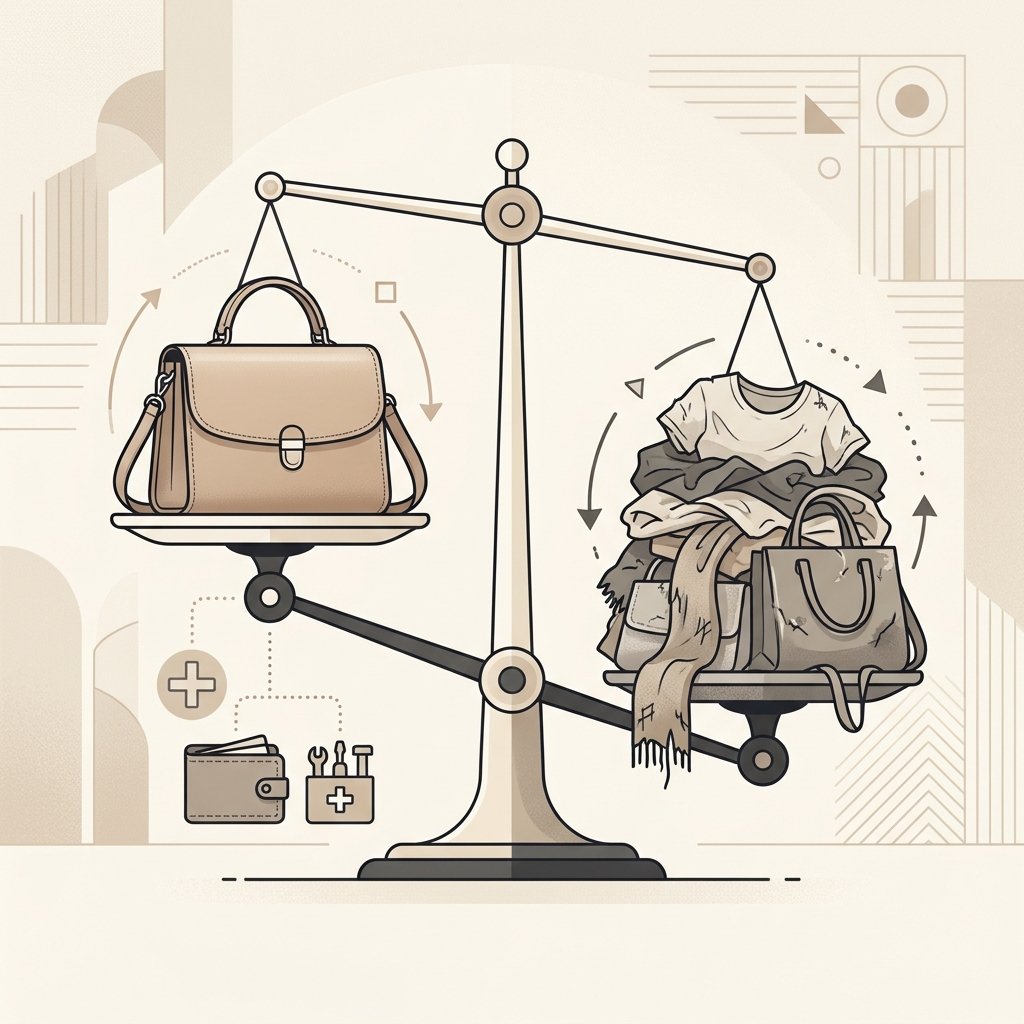
Building a minimalist luxury accessory rotation requires discipline. Fast fashion encourages buying dozens of cheap pieces on impulse, which quickly clutters storage spaces and drains financial resources. In contrast, calculating cost-per-wear (CPW) demonstrates the real economic advantage of luxury craftsmanship:
$$ ext{Cost Per Wear} = frac{ ext{Purchase Price} + ext{Maintenance Costs}}{ ext{Number of Wears Over Product Lifetime}}$$
| Accessory Category | Low-End Fast Fashion Piece | Minimalist Luxury Investment |
|---|---|---|
| Everyday Leather Bag | $80 retail (Lasts ~6 months, 90 wears) = $0.88 / wear | $1,800 retail (Lasts 10+ years, 1,200 wears) = $1.50 / wear |
| Goodyear-Welted Loafers | $70 retail (Lasts 1 year, 60 wears) = $1.16 / wear | $650 retail + $150 resole (Lasts 12 years, 720 wears) = $1.11 / wear |
| Solid Gold Everyday Band | $25 plated ring (Tarnishes in 2 months, 60 wears) = $0.41 / wear | $400 solid 14k ring (Lasts lifetime, 3,650 wears) = $0.10 / wear |
While the initial price tag of high-end accessories is higher, the durability, repairability, and aesthetic refinement of luxury items make them significantly more economical over time.
Final Thoughts: The Art of Restraint
A minimalist wardrobe does not restrict personal style; it clarifies it. When you remove noisy branding, flashy hardware, and fragile materials from your wardrobe, you create space to appreciate balanced design, tactile luxury, and precision manufacturing.
Begin by auditing the accessories you reach for on an ordinary morning. Identify where low-quality materials are letting down your everyday outfits. Replace those items gradually with pieces that reflect quiet luxury—a pristine leather tote, an exquisite mechanical watch, or an enduring pair of leather loafers. Over time, these few thoughtfully selected pieces will form an enduring signature collection that serves you reliably for decades.