

A well-maintained luxury leather bag can retain between 70 and 90 percent of its original retail price on the resale market, while an untreated piece can lose more than half its value within two years. High-end bags from heritage fashion houses are built to last for decades, but natural leather structure remains vulnerable to everyday hazards. Sun exposure dries out animal hides, hand creams leave greasy dark patches, and sudden rain can cause permanent surface blisters.
Taking care of a luxury purse does not require complicated equipment or aggressive cleaning chemicals. It requires consistent routines, gentle handling, and prompt attention whenever spills happen. Knowing how materials react to heat, moisture, and friction helps you protect your investment over decades of wear. Whether you collect classic flap bags, structured work totes, or casual crossbody styles, adopting practical maintenance habits keeps the hide supple, preserves the original color, and prevents premature breakdown on handles and corners.
Immediate Steps for Water Exposure and Everyday Spills
Water causes instant damage to fine leather goods if left unattended. Raindrops, drink splashes, and damp countertops can soak through surface finishes and warp the underlying animal fibers. According to the official <a href="
eBjYIy8aKA_A5Y8THsZTYeu2w4BfOJROSpCrewqQ_aKXxrcWxG7oGqe5wZrCCC”>Hermès leather care guidelines, full-grain luxury leather is especially sensitive to water; if contact occurs, it must be wiped immediately with a soft, lint-free cloth to prevent blistering and permanent stain formation.
Never apply direct heat to speed up the drying process. Hair dryers, radiators, and prolonged exposure to direct sunlight will cause the hide to contract, stiffen, and crack. Instead, blot—do not rub—the wet areas gently using a white microfiber cloth. Rubbing presses liquid deeper into the pores and can strip away the protective topcoat or pigments. Once surface moisture has been blotted away, allow the bag to air dry at room temperature in an upright position. Keep the bag open slightly in a well-ventilated space away from heaters, windows, and air conditioning units.
For oil-based spills like salad dressing, cosmetics, or perfume, water will only spread the grease across the surface. Blot the area gently with a dry paper towel to lift excess liquid. Avoid domestic detergents, dish soaps, or alcohol wipes, as these strip the natural tannins and oils out of the hide, leaving brittle, discolored rings that are difficult to correct. If a stubborn stain persists, seek professional leather restoration rather than experimenting with aggressive home remedies.
Understanding Different Leather Types and Finishes
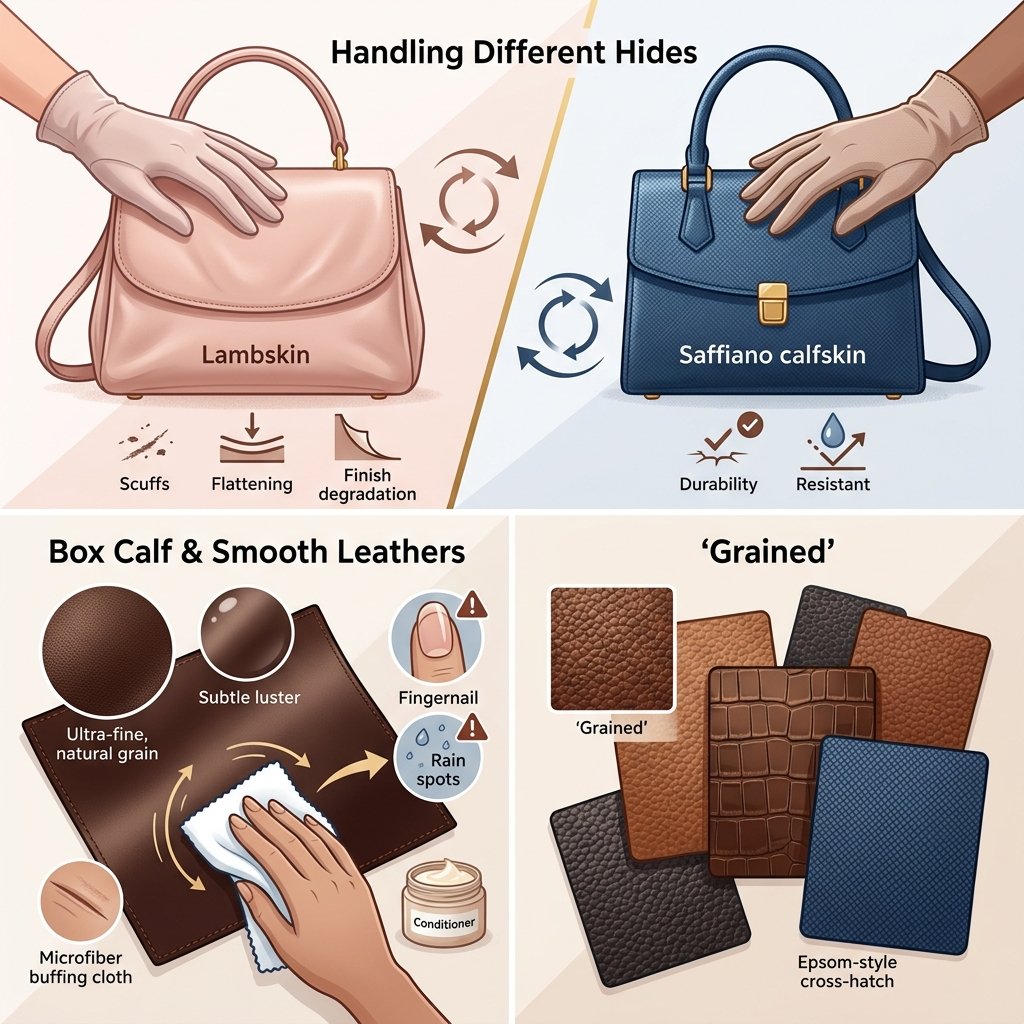
Luxury houses utilize diverse hides and finishing processes, and each texture requires specific handling. Treating a delicate lambskin bag the same way you treat durable saffiano calfskin can result in scuffs, flattening, or finish degradation.
Box Calf and Smooth Leathers
Box calf is prized for its refined grain and smooth, lustrous finish. Because it lacks heavy synthetic coatings, smooth calfskin reveals the natural characteristics of the hide. However, it is especially prone to fingernail scratches, rain spotting, and watermarks. Use light, circular motions with a clean microfiber buffing cloth to blend minor surface abrasions. Keep smooth hides well-conditioned to prevent drying.
Grained and Embossed Leathers
Grained leathers—such as pebbled calf, caviar, and cross-grain saffiano—feature textured surfaces created through stamping or natural shrinkage. The raised pattern makes these hides substantially more resilient to everyday wear, abrasions, and superficial moisture. Dirt and dust can collect within the valleys of the grain over time, requiring periodic cleaning with a soft horsehair brush to prevent grime buildup.
Lambskin and Delicate Hides
Lambskin delivers a buttery, ultra-soft hand feel, but its thin dermis makes it one of the most vulnerable materials in luxury design. Lambskin absorbs body oils quickly and scuffs easily against coarse textiles like denim or tweed. Avoid carrying lambskin pieces in crowded environments or bad weather, and never stack other heavy items on top of them during storage.
Suede and Nubuck
Suede and nubuck feature an open, buffed nap rather than a sealed outer epidermis. This velvety texture makes them extremely porous. Moisture instantly stains them, and liquid conditioners will mat down the fibers permanently. Never apply leather lotions, creams, or oils to suede. Instead, use a designated crepe brush to lift flattened nap and a dedicated suede eraser to remove dry surface marks.
Establishing a Safe Routine for Cleaning and Conditioning
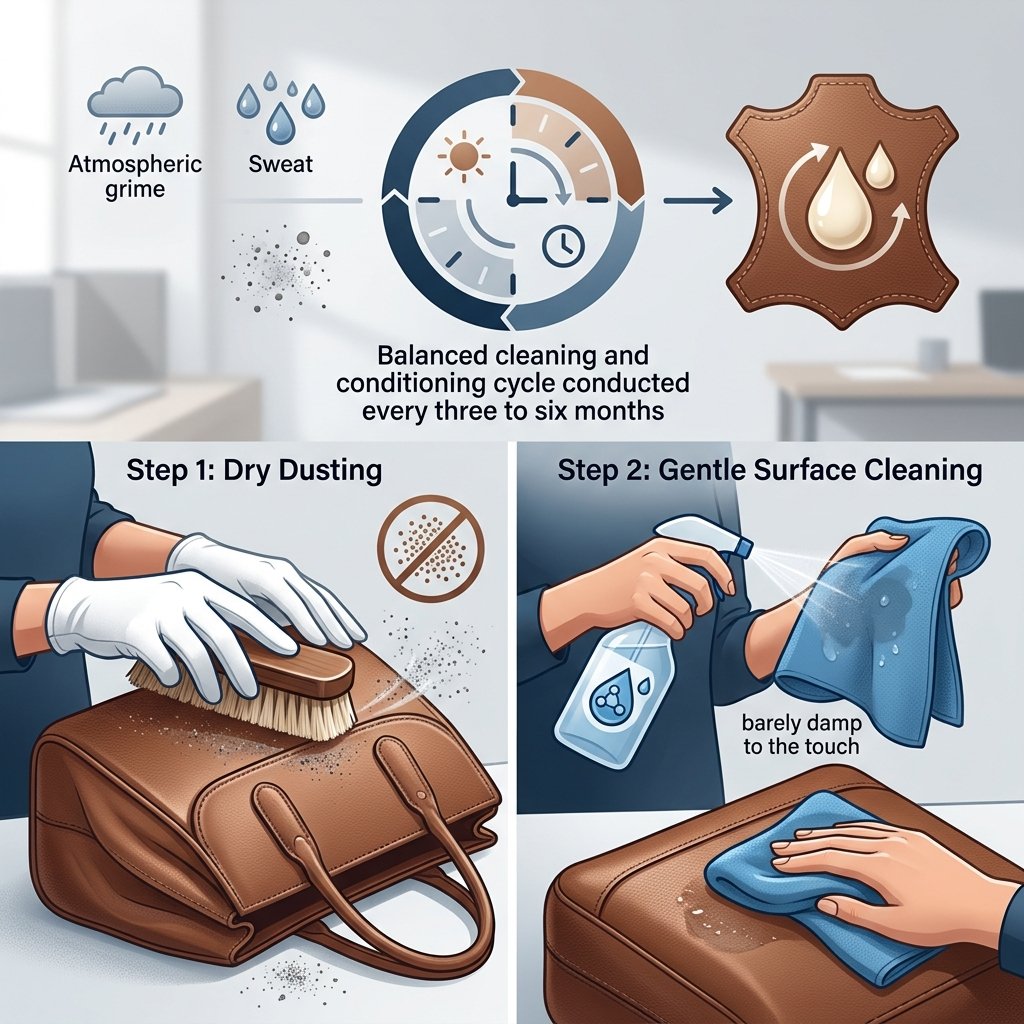
Routine maintenance prevents accumulated atmospheric grime, sweat, and dust from breaking down the natural fats in leather. A balanced cleaning and conditioning cycle conducted every three to six months will preserve suppleness without over-saturating the hide.
Step 1: Dry Dusting
Before applying any product, remove all items from the interior and brush the exterior with a clean, dry, soft-bristled horsehair brush. Pay close attention to seams, folds, and piping where grit gathers. Fine dust acts like sandpaper against moving seams if left trapped beneath a coat of conditioner.
Step 2: Gentle Surface Cleaning
Moisten a clean microfiber towel with distilled water until it is barely damp to the touch—never dripping. Wipe down the entire exterior evenly to lift surface residue. Distilled water prevents mineral deposits or hard-water streaks from forming on darker hides. Allow the exterior to dry naturally for thirty minutes before proceeding.
Step 3: Proper Conditioning
Leather is skin; over time, atmospheric fluctuations cause it to lose moisture. Choose a neutral, wax-free leather conditioner formulated specifically for luxury goods. Avoid petroleum-based saddle soaps and all-in-one car upholstery sprays, which leave gummy residues that attract dirt.
Apply a nickel-sized amount of conditioner to a clean cloth—never pour product directly onto the leather. Work the conditioner into the leather using small, gentle circular motions, distributing it evenly over panels and handles. Allow the conditioner to absorb for fifteen to twenty minutes, then buff the entire bag with a fresh, dry microfiber cloth to remove excess product and restore a healthy, natural luster.
Protecting Vulnerable Components: Handles, Corners, and Hardware
Certain areas of a designer handbag absorb far more mechanical friction and chemical contact than flat side panels. Focusing your care routine on these vulnerable stress points helps prevent costly structural repairs.
Top Handles and Shoulder Straps
Handles come into constant contact with bare skin, absorbing sweat, hand sanitizers, and moisturizers. Alcohol from hand sanitizers dissolves surface topcoats instantly, while skin oils oxidize inside light-colored leathers, turning handles dark and greasy. Protect top handles by wrapping them in silk twill ribbons (twillies) during frequent use. When applying hand cream or sanitizing gel, wait until your skin is completely dry before picking up your bag.
Base Corners and Piping
Corners bear the brunt of everyday friction against clothing, chairs, and tables. Over time, the outer pigment wears away, exposing the pale, dry raw hide underneath. Once the outer layer thins, moisture penetrates directly into structural piping. Be mindful of how you carry the bag; avoid dragging it along car seats or resting it against abrasive fabrics like raw denim, which can cause severe dye transfer.
Preserving Metal Hardware
Luxury closures, chains, and feet are often crafted from brass, palladium, or gold-plated alloys. These elements will tarnish if exposed to humidity, perfume, and body oils. Buff hardware gently with a clean jewelry-polishing cloth to remove fingerprints and surface oxidation. Avoid chemical liquid metal polishes, which can splash onto neighboring leather and cause permanent chemical bleaching.
Best Practices for Seasonal and Long-Term Storage
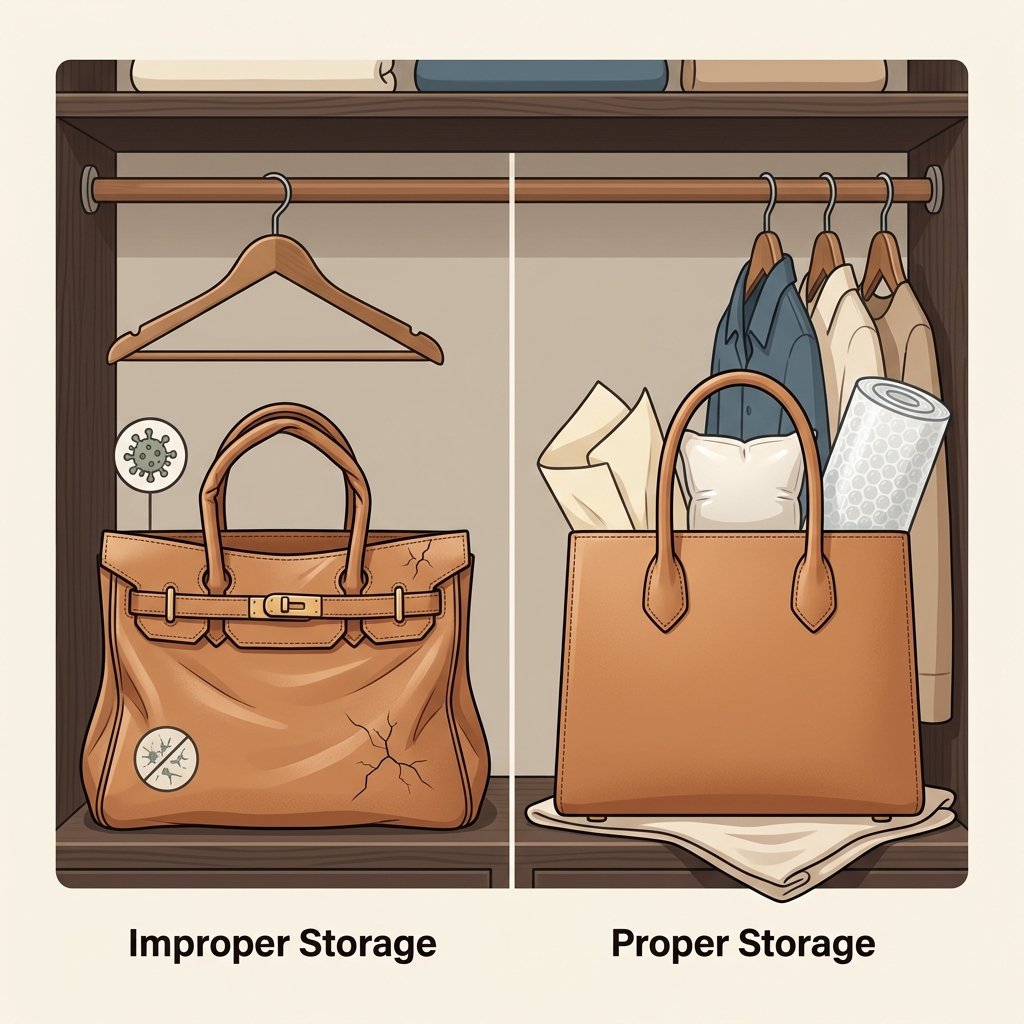
The way a bag rests in your closet influences its structural integrity just as much as how you carry it outside. Improper storage causes misshapen silhouettes, crushed handles, mold growth, and leather cracking.
Structural Stuffing
Never store an empty leather bag flat. Over time, gravity pulls unsupported leather downward, creating permanent creases across the front panels and base. Fill the interior cavity with acid-free tissue paper, an inflatable purse pillow, or clean, undyed bubble wrap. Avoid printed newspapers or colorful tissue paper, as moisture can cause the inks to transfer onto the bag’s fabric or suede lining. Pack the bag firmly enough to support its natural silhouette, but avoid overstuffing, which stretches seams and distorts zippers.
Breathable Dust Covers
Store each bag inside its original cotton or linen dust bag. Never seal leather inside plastic containers, vinyl covers, or airtight vacuum bags. Real leather requires air circulation to maintain its natural internal moisture balance. Trapping a bag inside non-breathable plastic creates an environment where trapped humidity promotes mold, mildew, and leather rotting.
Temperature and Climate Management
Store luxury pieces in a temperature-controlled environment away from direct sunlight, heating ducts, and damp basements. Ideal storage conditions maintain relative humidity between 45 and 55 percent. Excessive dryness causes hides to become brittle and split, whereas excessive humidity leads to mold blooms and tarnished hardware. If you live in an especially humid climate, place reusable silica gel packets inside the storage closet—never directly inside the handbag—to regulate environmental moisture.
Positioning and Straps
Store structured bags standing upright on a flat shelf. Leaving heavy bags hanging from closet hooks stretches the handles and distorts the top frame. Tuck shoulder chains and detachable straps inside the main compartment or wrap them in acid-free tissue paper to prevent metal links from pressing indents into the exterior leather during long periods of rest.
Preventing Color Transfer and Friction Damage
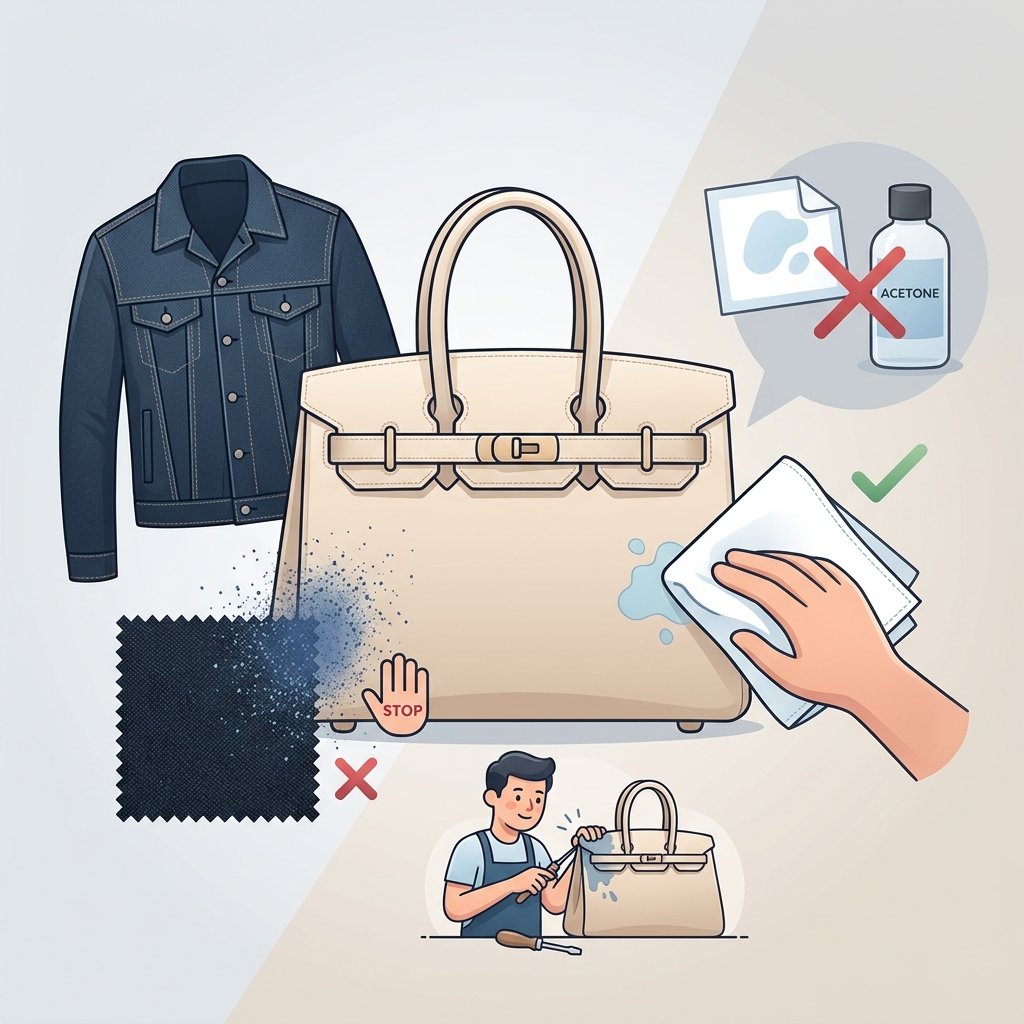
Dye migration is one of the most common and difficult issues to resolve on luxury leather, particularly on light shades such as beige, cream, pastel, and white. Unwashed, dark-wash denim is notorious for releasing indigo dye via friction onto leather surfaces.
When carrying light-colored leather bags, wear colorfast garments and avoid pairing them with dark denim jackets or jeans. If color transfer occurs, blot the area immediately with a damp microfiber cloth. Do not scrub with makeup removers or acetone. If the pigment has bonded with the leather, schedule an appointment with a professional leather artisan who can chemically strip the foreign dye and re-match the original factory color without compromising the hide’s natural texture.
Professional Servicing vs. DIY Maintenance
While daily upkeep, dry dusting, and light conditioning can be safely managed at home, know when to rely on a professional leather spa. Attempting complex structural repairs or chemical cleanings without specialized tools often results in irreversible surface burns, uneven color patches, or flattened grain.
Consult a certified luxury leather artisan or the original fashion house for:
- Severe ink stains, grease marks, and liquid dye transfer.
- Worn piping, loose stitching, or structural collapse along edges.
- Chipped, scratched, or heavily tarnished hardware requiring replating.
- Deep gouges, tears, or significant surface cracking.
- Mold remediation and musty odor removal.
By implementing safe everyday habits, protecting hides from extreme moisture and sunlight, and storing each item correctly, you safeguard both the beauty and the financial investment of your designer leather collection for generations to come.