

- Best for skin: Hydrolyzed collagen supplements
- Best for joints: Collagen peptides + bone brot
- Best natural source: Bone broth collagen
- Best fast option: Marine collagen
- Best long-term strategy: Combine natural collagen sources with supplements
Collagen has become one of the biggest wellness trends in the USA. From powders to bone broth, people are constantly looking for ways to support healthier skin, stronger joints, and better aging. But one big question keeps coming up: collagen foods vs supplements which one actually works? The answer is not as simple as picking one over the other. It depends on your goals, lifestyle, and how your body responds.
What Is Collagen and Why Does Your Body Need It?
Collagen is the most abundant protein in the human body. It works like glue that holds your skin, bones, joints, and muscles together. Your body naturally makes collagen every day. But after the age of 25, collagen production starts slowing down.
Without enough collagen, visible aging happens much faster.
The Role of Collagen in Skin, Bones, and Joints
Collagen gives your skin structure, firmness, and elasticity. It also keeps joints flexible and helps bones stay strong. Many people notice wrinkles, joint stiffness, or weaker nails when collagen drops. That is why collagen support matters as you age.
Why Collagen Production Drops With Age
Aging is the main reason collagen decreases naturally. Sun exposure, smoking, poor sleep, and bad diet can speed it up. Stress also affects collagen breakdown. That’s why many people start following a collagen diet guide early. Multiple clinical studies confirm that daily collagen peptide intake can visibly improve skin hydration and elasticity within just a few months, making it one of the most researched anti-aging nutrients available today.
Collagen Foods vs Supplements, What’s the Difference?
When comparing collagen foods vs supplements, the main difference is how your body gets the nutrients. Foods provide natural building blocks for collagen production. Supplements deliver collagen directly in concentrated form. Both can support healthy aging, but they work differently.
Your body uses them in unique ways.
How Natural Collagen Sources Work
Natural collagen sources give your body amino acids like glycine, proline, and hydroxyproline. These are the raw materials needed to build collagen, and pairing them with the right plant-based protein sources can make the process even more effective. Foods also provide vitamins and minerals that help the process. It is a slower but more complete approach.
How Collagen Supplements Work
Collagen supplements usually come as hydrolyzed collagen or collagen peptides. These are broken down into smaller pieces for faster absorption. That makes them easier for the body to use quickly. Many people choose them for convenience.
Bioavailability and Absorption Differences
Absorption matters more than many people realize. Supplements are designed for quick digestion and higher bioavailability. Foods take longer but offer broader nutrition. This is where supplements often have an edge.
| Factor | Collagen Foods | Supplements |
|---|---|---|
| Absorption Speed | Slower | Faster |
| Nutrient Variety | High | Moderate |
| Convenience | Low | High |
| Cost | Medium | Medium-High |
| Results Speed | Slower | Faster |
Best Natural Collagen Sources in Your Diet
If you prefer food over pills, there are plenty of options. Some foods contain collagen directly. Others help your body make more of it. Choosing the right skin health food can make a big difference.
Consistency is what brings better results.

Bone Broth Collagen Benefits
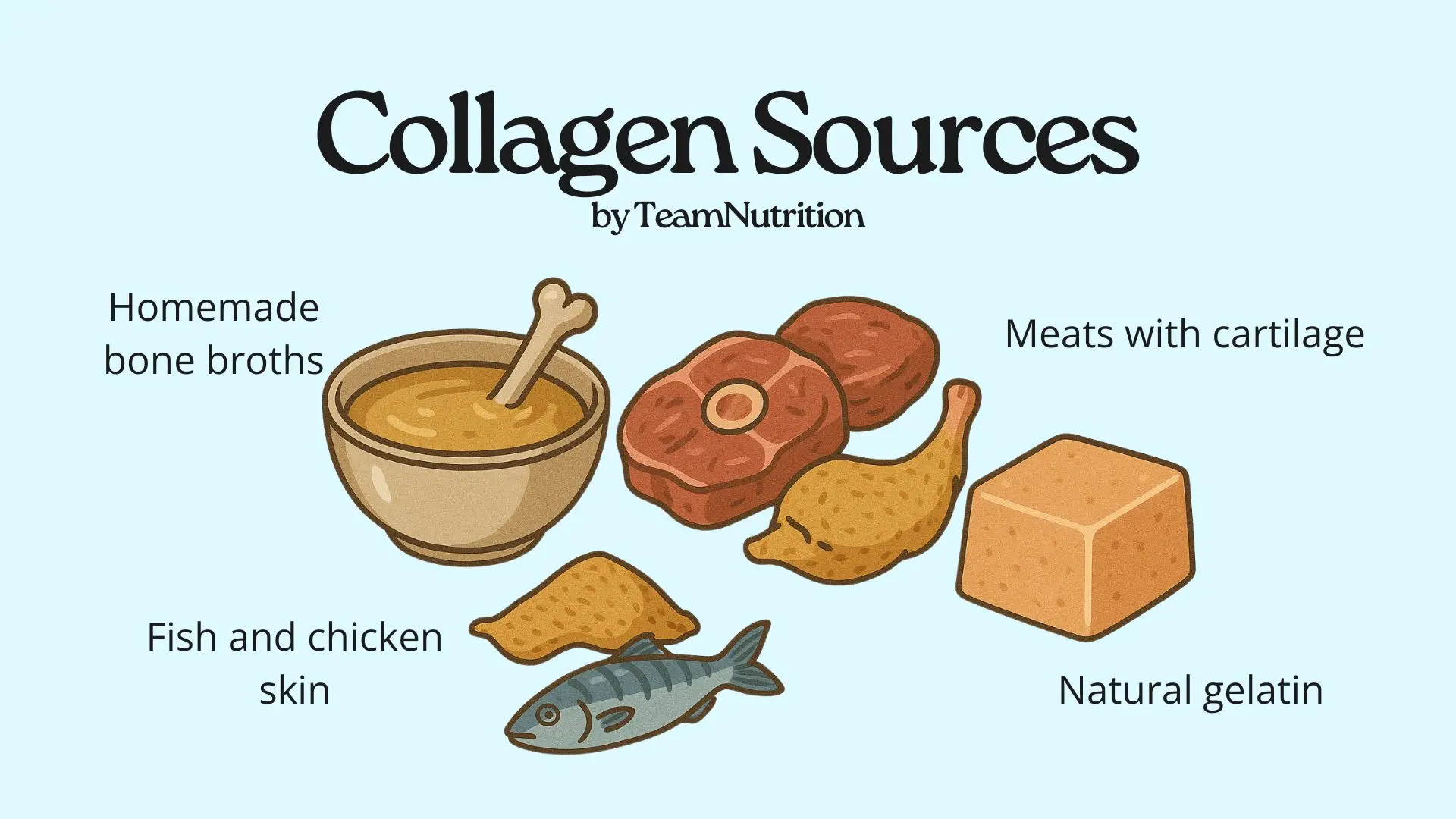
Bone broth collagen is one of the richest natural sources available. It contains collagen, gelatin, and amino acids that support skin and joints. Many people in the USA use it daily for gut and joint health. It is simple, affordable, and effective. Many people in the USA use it daily for gut and joint health. It is simple, affordable, and effective.
Fish Skin and Marine Sources
Fish skin is rich in marine collagen, especially Type I collagen. This type is strongly linked to skin elasticity and wrinkle reduction. Marine collagen absorbs quickly in the body. That makes it a popular anti-aging option.
Chicken Skin, Egg Whites, Citrus, and Berries
Chicken skin contains connective tissues full of collagen. Egg whites are rich in proline, which supports collagen production. Citrus fruits and berries provide vitamin C, which is essential. Without vitamin C, collagen synthesis slows down.
Nutrients That Boost Collagen Naturally
Some nutrients help your body build collagen better:
- Vitamin C
- Zinc
- Copper
- Protein
- Amino acids
These nutrients act like fuel for collagen production.
Do Collagen Supplements Actually Work?
This is where science becomes important. Many studies show collagen supplements can improve skin hydration, elasticity, and joint comfort. But results depend on consistency and quality. Not all supplements are equal.
Good products make a big difference.
Hydrolyzed Collagen Explained
Hydrolyzed collagen means the protein is broken into peptides. This makes it easier to absorb. It is the most common form in powders and capsules. Most research uses hydrolyzed collagen.
Research on Skin Elasticity
Studies suggest collagen peptides may improve skin elasticity within 8 to 12 weeks. People often report fewer wrinkles and better hydration. It works best when paired with vitamin C. Results are gradual but noticeable.
Research on Joint Pain
Collagen supplements may help reduce joint pain, especially for active adults. Athletes often use them alongside the right post-workout meals for recovery support. They may also help protect cartilage. This makes them useful for aging adults.
Research on Bone Strength
Some evidence shows collagen can improve bone mineral density. This is especially useful for women over 40. Bone health needs long-term support. Collagen can play a role here.
Collagen Foods vs Supplements for Skin Health
For skin goals, both options can help. But speed and effectiveness can differ. Supplements often work faster because of direct peptide delivery. Foods support better overall nutrition.
Skin loves consistency more than quick fixes.
Which Improves Wrinkles Faster?
Collagen supplements usually show faster wrinkle improvements. Their bioavailability helps the body use them quickly. This can lead to visible changes sooner. Food-based collagen takes more time.
Which Improves Hydration Better?
Hydration improves best with supplements plus proper diet. Skin health food like berries and avocados also helps, and adding gut-friendly hydrating drinks can support this further. Water intake matters too. Good hydration needs a complete lifestyle.
Collagen Foods vs Supplements for Joint and Bone Health
Joint and bone support often needs long-term consistency. Natural collagen sources help strengthen the body gradually. Supplements can speed up recovery and reduce discomfort. Both work better together.
A combined strategy often gives stronger results.
Recovery and Mobility Comparison
Athletes and older adults often prefer supplements for recovery. They can reduce soreness and improve flexibility. Food supports muscle repair naturally. The balance depends on your needs.
Long-Term Bone Density Support
Bone broth collagen, dairy, and protein-rich meals support bone health naturally. Supplements add extra support when needed. Aging adults may benefit more from combining both. Bone health is a long game.
Cost Comparison in the USA
Budget matters when choosing between food and supplements. Many people assume food is cheaper. But premium foods can also get expensive. The USA market offers many supplement price ranges.
Smart choices depend on your budget.
Monthly Cost of Food-Based Collagen
Bone broth, fish, chicken, and eggs can cost $60–$120 monthly. Organic options cost more. Home-cooked meals may lower the cost. It depends on your diet habits.
Monthly Cost of Supplements
Collagen powders usually cost $25–$70 per month. Premium marine collagen costs more. Some blends include vitamin C and hyaluronic acid. Those can improve value.
| Option | Average Monthly Cost (USA) |
| Bone Broth | $40–$80 |
| Fish & Poultry | $60–$120 |
| Collagen Powder | $25–$70 |
| Marine Collagen | $40–$90 |
Which Option Should You Choose?
Choosing between collagen foods vs supplements depends on your goal. Fast skin results often favor supplements. Better long-term nutrition favors food. The smartest option may be combining both.
That gives the body full support.
Best for Anti-Aging
Supplements often win for anti-aging speed.
Best for Budget
Bone broth collagen is usually budget-friendly.
Best for Fast Results
Hydrolyzed collagen works faster.
Best for Long-Term Health
Natural collagen sources support overall wellness better.
The Best Collagen Diet Guide for Maximum Results
The best collagen plan is balanced. You need collagen-rich foods plus smart supplementation. This supports skin, bones, and joints better. It also improves collagen absorption.
Simple habits create stronger long-term results.
Combining Foods and Supplements
Using both gives better coverage. Foods offer vitamins and minerals. Supplements deliver concentrated collagen peptides. Together, they work well.
Sample Daily Meal Plan
- Morning: collagen coffee + berries
- Lunch: grilled chicken + spinach
- Snack: citrus fruit + nuts
- Dinner: bone broth soup + fish
- Night: collagen smoothie
Final Verdict
If your goal is quick skin improvement or joint relief, supplements often work faster. If your goal is long-term health, food should stay the foundation. The best approach is combining both. That gives your body complete support for collagen production.
As Samppy often highlights in wellness-focused discussions, sustainable health wins over shortcuts. A smart collagen strategy is not about choosing one side. It is about building a system that supports aging, beauty, and strength naturally.
FAQs
Is bone broth better than collagen powder?
Bone broth is natural and nutrient-rich, but collagen powder absorbs faster.
Can food replace collagen supplements?
Yes, but it may take longer to see results.
How long does collagen take to work?
Most people notice changes in 8 to 12 weeks.
Which collagen type is best for skin?
Type I collagen is considered best for skin health.
Are collagen supplements safe daily?
Yes, most are safe when taken as directed.