

Road Trip Gummies have become a widely searched name in the mushroom gummy market, particularly among consumers looking for products marketed around mood, relaxation, focus, or psychedelic style experiences.
But understanding what you are actually buying is more complicated than the colorful packaging suggests.
Different Road Trip products have been marketed with different formulations, including functional mushroom blends, Amanita related products and proprietary active ingredients.
At the same time, independent reports and public health investigations have raised broader concerns about mushroom gummies whose labels do not fully reveal their active compounds.
Key Takeaways
- Road Trip Gummies are not one single formulation different product lines may contain different ingredients.
- Some Road Trip products have been marketed as containing proprietary blends rather than clearly identified psychoactive ingredients.
- Current product pages claim certain formulations contain no THC or psilocybin, but consumers should verify the exact product and batch rather than relying on broad brand claims.
- Independent testing is particularly important because the broader mushroom-gummy category has been associated with undisclosed substances and serious adverse events.
What Are Road Trip Gummies?
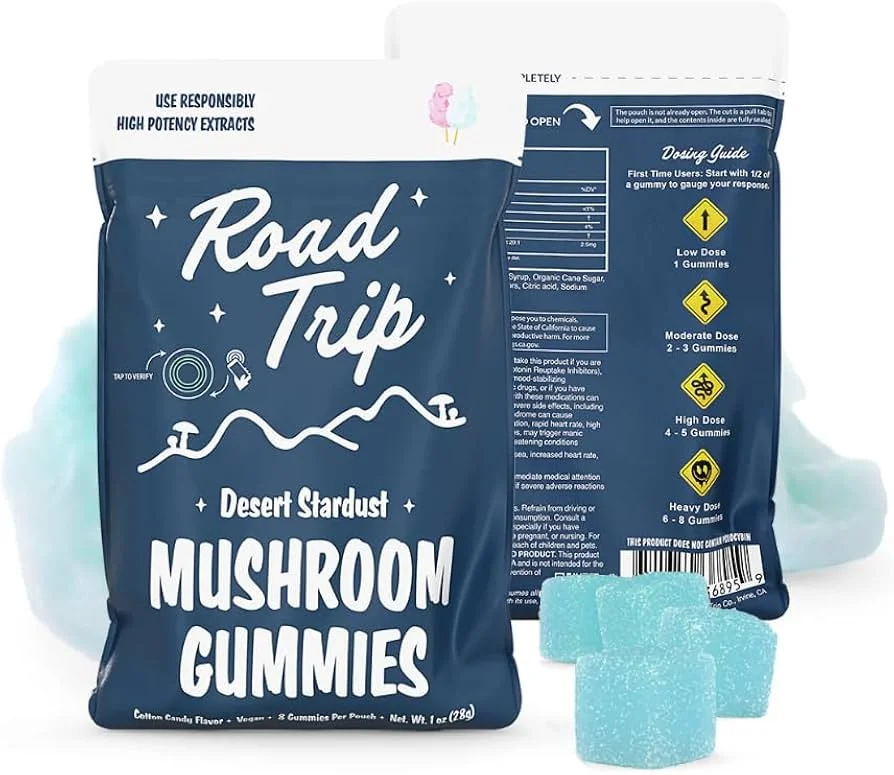
Road Trip Gummies are a branded line of mushroom related edible gummies marketed primarily toward adults seeking experiences involving mood, relaxation, focus or altered perception.
The important point is that Road Trip Gummies does not necessarily describe one standardized formula.
Publicly available product information shows multiple product categories and formulations. Some pages describe functional mushroom blends containing ingredients such as Lion’s Mane, Reishi, and Cordyceps, while other Road Trip products have been associated with Amanita muscaria or proprietary compounds.
That makes it risky to generalize about every Road Trip product based on a single review or laboratory report.
Why the formulation matters
With conventional supplements consumers can usually compare an ingredient label, serving size and standardized active ingredients.
That becomes more difficult when a product uses terms such as proprietary blend without identifying every active compound and its quantity.
For a product intended to produce noticeable neurological or psychoactive effects, knowing the identity and amount of the active ingredient is especially important.
What Ingredients Are in Road Trip Gummies?
This is one of the most important questions surrounding the brand.
Some current Road Trip marketing describes products as containing functional mushrooms and a proprietary blend while stating that certain products contain no THC, psilocybin or cannabis derived compounds. The brand also publishes laboratory testing information for some products.
Some third party reviews have criticized the brand because certain products have historically not provided enough information for consumers to independently identify every active compound.
Are Road Trip Gummies Psychedelic?
The answer depends on the specific product and formulation.
Some Road Trip products are marketed as functional or microdosed mushroom gummies while other versions have been marketed for stronger psychoactive style effects.
This is where online reviews can become confusing. Different generations of products, different product lines and potentially counterfeit products can be discussed under the same brand name.
Recent online discussions have also included claims about unidentified or changing active compounds. Those user reports should not be treated as laboratory confirmation.
A responsible consumer should therefore avoid assuming that a Road Trip gummy is equivalent to either ordinary functional mushrooms or traditional psilocybin mushrooms.
What Does Science Say About Mushroom Gummies?
In 2024 the CDC investigated cases involving gummies marketed as containing Amanita muscaria or other mushrooms. Five people required hospital evaluation after consuming mushroom gummies and testing of five brands found that three contained undisclosed Schedule I substances including psilocybin and psilocin.
It does demonstrate why consumers should not assume that the front of a gummy package tells the whole story.
The CDC has also documented serious illnesses associated with another mushroom edible brand. Its investigation ultimately identified 180 cases across 34 states including hospitalizations and deaths associated with the outbreak.
These findings are important context for anyone researching Road Trip Gummies because they show that the risks are not merely theoretical within the broader category.
Are Road Trip Gummies Safe?
There is no responsible way to give every Road Trip product a blanket safe or unsafe label without identifying the exact formulation and batch.
The greater concern is uncertainty.
A consumer cannot properly evaluate risk if the active ingredient, concentration, purity, and potential interactions are unclear.
The CDC has warned that mushroom containing edible products marketed for cognitive, health or psychoactive effects may contain undisclosed, misformulated or unapproved ingredients.
Potential warning signs
Be particularly cautious when a product:
- Does not clearly identify its active ingredients.
- Provides no batch specific certificate of analysis.
- Uses vague proprietary terminology for compounds responsible for noticeable effects.
- Makes unusually strong health or neurological claims.
- Has packaging that differs substantially from the manufacturer’s current information.
- Is purchased from an unknown seller.
- Has laboratory documentation that does not match the exact product and batch.
What Should a Good COA Show?
A certificate of analysis, or COA, can be useful but only if you understand what it actually proves.
A strong laboratory report should ideally identify:
| What to check | Why it matters |
| Exact product name | Confirms the report applies to your product |
| Batch or lot number | Connects testing to a specific production batch |
| Test date | Helps establish how current the information is |
| Active compound testing | Shows whether claimed active ingredients were actually measured |
| Potency | Indicates the concentration rather than merely presence/absence |
| Heavy metals | Screens for potentially harmful contamination |
| Microbial testing | Checks for biological contamination |
| Pesticides/residual solvents | Adds another layer of quality control |
| Accredited laboratory | Provides greater confidence in the testing process |
Road Trip’s current laboratory information pages state that some batches undergo third-party testing for active compounds and contaminants, including heavy metals, microbes, pesticides, and residual solvents.
Road Trip Gummies vs. Traditional Mushroom Products
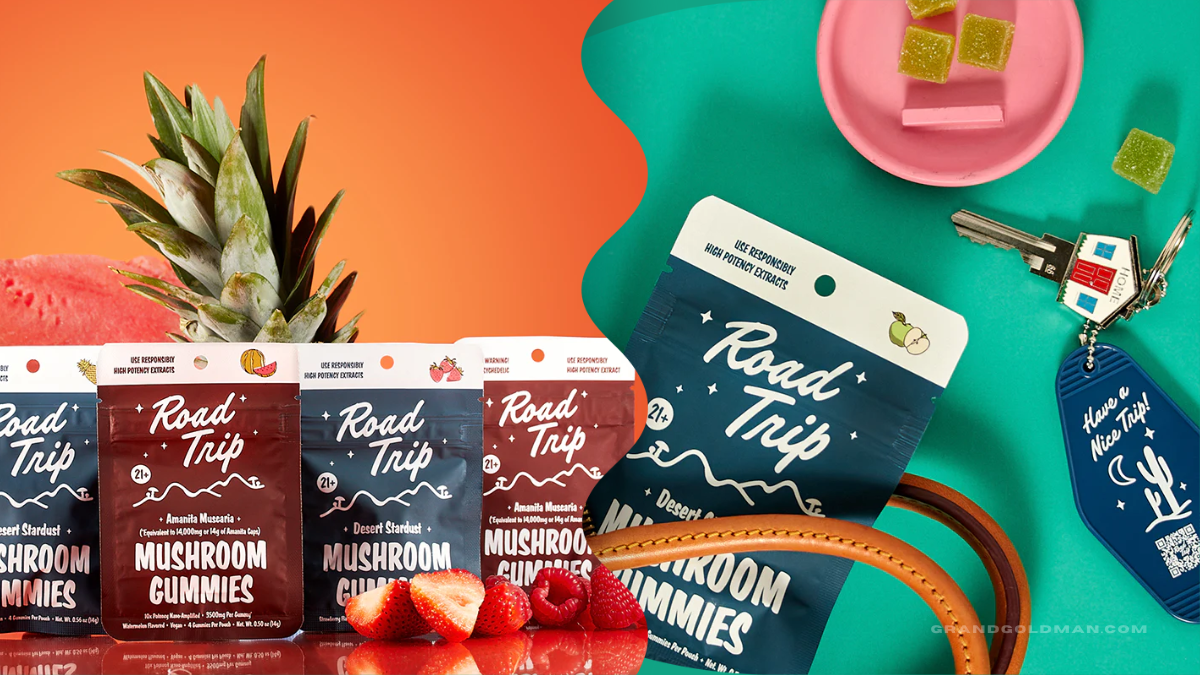
It is useful to separate several categories that are frequently mixed together online.
| Product category | What it may contain | Main issue |
| Functional mushroom gummy | Non-psychoactive mushroom extracts | Evidence and dose can vary |
| Amanita gummy | Amanita derived compounds | FDA food-safety concerns |
| Psilocybin mushroom product | Psilocybin/psilocin | Legal status varies and controlled-substance laws apply |
| Proprietary psychoactive gummy | Undisclosed or specially formulated active compounds | Ingredient transparency becomes critical |
| Cannabis gummy | THC or other cannabinoids | Different pharmacology and legal framework |
Calling all of these products mushroom gummies can create a misleading impression that they are interchangeable.
Do Road Trip Gummies Show Up on a Drug Test?
There is no universal yes or no answer.
Standard drug panels do not test for every possible compound found in novel mushroom or psychoactive products. The CDC has specifically noted that commonly used urine drug screens may not detect some substances found in mushroom gummies.
However, consumers should not interpret this as a guarantee that a particular product will never affect a drug test.
Formulas can change, contamination can occur, and specialized testing can target compounds that ordinary panels do not include.
Can You Take Road Trip Gummies Before Driving?
No. Road Trip Gummies should not be treated as something to consume before driving.
Any product capable of producing psychoactive, sedating, perceptual, or neurological effects can impair judgment and reaction time.
This is especially important because some mushroom related edible products have been associated with confusion, drowsiness, agitation, nausea, altered mental status and other symptoms.
A road trip is therefore one of the worst settings in which to experiment with an unfamiliar psychoactive edible.
If someone has consumed a product and feels impaired, they should not drive or operate machinery.
How to Spot a Potentially Fake Road Trip Product
Counterfeit and unofficial products are another reason to be careful.
Before purchasing compare the package with information from the manufacturer’s current channels and look for:
- Consistent branding and packaging.
- A legitimate lot or batch identifier.
- Current laboratory documentation where available.
- A verifiable seller.
- Clear ingredient information.
- Packaging security or authenticity features when the manufacturer provides them.
Some current Road Trip materials describe authentication features and batch specific laboratory documentation but consumers should still verify the exact package rather than assuming every product sold under the name is authentic.
What Should Consumers Look for in 2026?
The mushroom edible market has matured enough that consumers should expect more transparency not less.
A stronger product should provide:
- A complete and understandable ingredient panel.
- Clearly identified active ingredients.
- Meaningful potency information.
- Batch-specific third party laboratory testing.
- Contaminant testing.
- Clear age and safety warnings.
- Accurate product descriptions.
- Transparent information about formulation changes.
These factors are more meaningful indicators of product quality than flashy packaging, influencer testimonials or claims about being natural.
What If You Experience a Bad Reaction?
Anyone who experiences severe or unexpected symptoms after consuming a mushroom or psychoactive gummy should seek medical attention.
Concerning symptoms can include severe confusion, loss of consciousness, seizures, difficulty breathing, extreme agitation, persistent vomiting, or significant changes in heart rate or blood pressure.
The CDC has specifically advised people experiencing symptoms after consuming mushroom containing gummies to seek immediate medical attention.
Keep the packaging available for healthcare professionals if possible. The exact product name, ingredient label, batch number, and purchase source may help clinicians determine what was consumed.
Final Verdict
Road Trip Gummies are a good example of why the rapidly expanding mushroom edible market requires more careful research than ordinary supplement shopping.
The brand offers multiple formulations, and current product materials describe laboratory testing and the absence of certain compounds in some products. But independent public health evidence shows that the wider mushroom gummy category has experienced serious labeling and contamination problems, including products containing undisclosed psychoactive substances.
Check the exact formulation, look for batch specific laboratory evidence, understand the regulatory status, and take claims about safety or effects seriously. If the active ingredient remains unclear, uncertainty itself is a reason to be cautious At Samppy, we prioritize consumer awareness, quality standards, and informed choices to keep your travel experiences safe, enjoyable, and well-prepared.
Frequently Asked Questions
Are Road Trip Gummies real?
Yes, Road Trip is a real product brand with multiple products marketed as mushroom gummies and related edibles. However, unofficial websites and counterfeit products can also use similar branding, so consumers should verify the seller and exact product.
Do Road Trip Gummies contain psilocybin?
Not necessarily. Current Road Trip materials state that certain products do not contain psilocybin, while the exact formulation varies by product. Consumers should verify the specific product and current batch documentation rather than applying one statement to the entire brand.
Are Road Trip Gummies the same as magic mushrooms?
No. Mushroom gummy is a broad marketing category. Products can contain functional mushroom extracts, Amanita related compounds, psilocybin or other ingredients. They should not be assumed to be equivalent.
Can Road Trip Gummies cause side effects?
Potential effects depend on the ingredients and formulation. Mushroom related psychoactive products have been associated with symptoms including nausea, drowsiness, confusion, agitation, altered mental status and other neurological effects.
Should you buy Road Trip Gummies?
There is no one size fits all answer but transparency should be the deciding factor. If the exact active ingredients, potency, and current batch testing cannot be verified, consumers have a legitimate reason to reconsider the purchase.