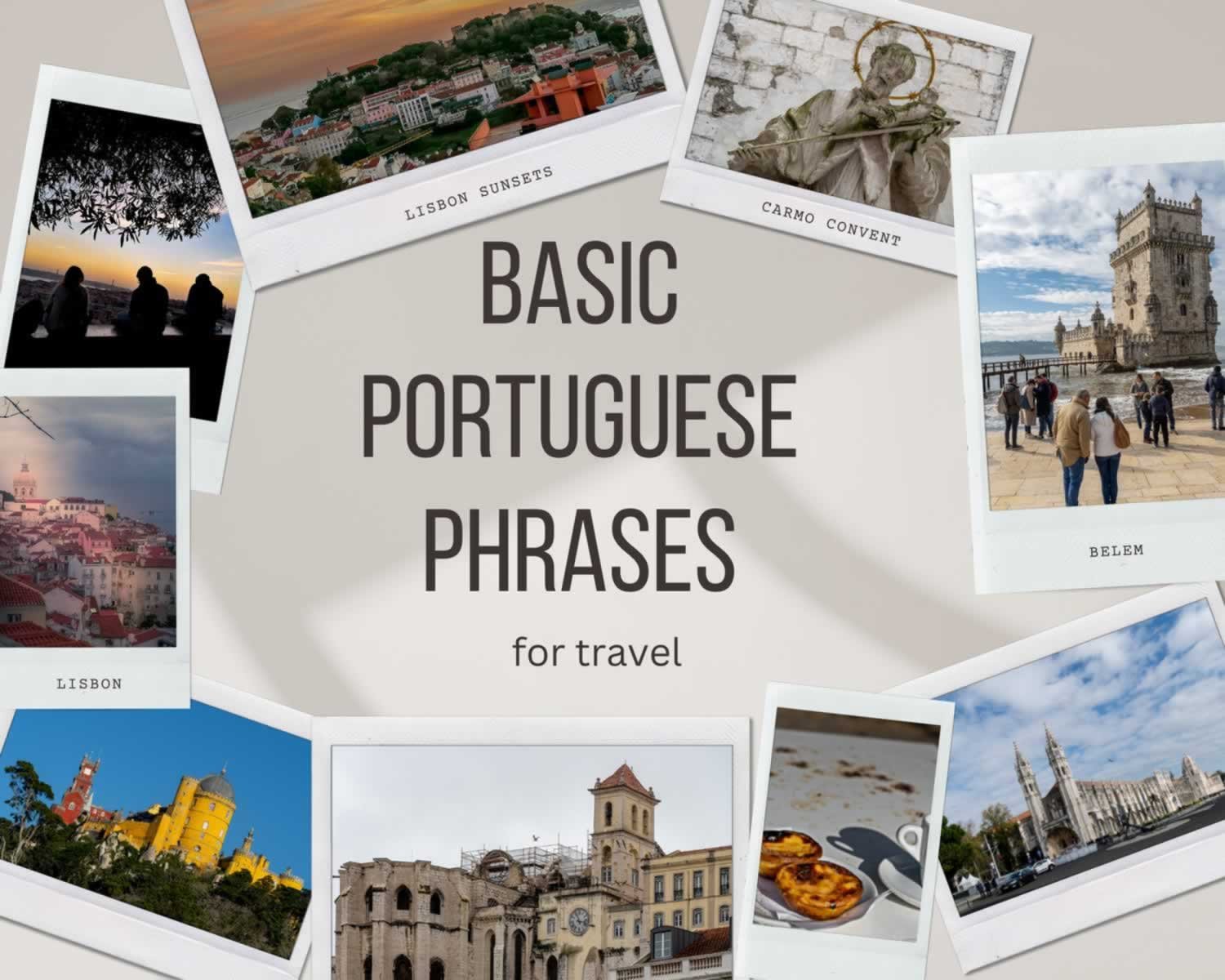
This beginner-friendly guide provides 50 practical expressions for travelers visiting Portuguese-speaking destinations. It covers greetings, directions, transportation, hotels, restaurants, shopping, money, and emergencies. Travelers should also understand important vocabulary differences between Brazilian and European Portuguese. The best approach is to memorize useful expressions by situation and practice speaking them aloud before traveling.
Traveling to Portugal or Brazil becomes easier when you know a few local expressions. Portuguese phrases for travel can help you order food, ask directions, check into hotels, and communicate politely. You do not need fluent Portuguese to handle common situations confidently. A few practical expressions can make everyday travel feel much more comfortable.

This beginner-friendly guide covers 50 useful phrases for real travel situations. You will find English meanings, simple pronunciation help, and practical usage tips. The phrases cover greetings, transportation, hotels, restaurants, shopping, directions, and emergencies. You will also learn some important differences between Portuguese spoken in Portugal and Brazil.
Why Learn Portuguese Phrases Before Traveling?
Learning basic Portuguese shows respect and can make local interactions friendlier. Even simple words can help when English is not widely understood. These expressions are especially useful during transportation, dining, shopping, and hotel stays. You can also avoid confusion when asking for directions or assistance.
You Don’t Need to Speak Portuguese Fluently
Short phrases are often enough for travelers handling everyday situations. Focus on expressions you can remember and use without hesitation. Perfect grammar is less important than communicating your basic needs clearly. Confidence grows naturally when you practice useful phrases before traveling.
A Few Words Can Make Travel Easier
Knowing simple Portuguese words can make unfamiliar places feel less stressful. You can greet people, request assistance, and understand common travel situations. Local speakers often appreciate visitors who make an effort to communicate. Start with polite expressions because they work in almost every situation.
50 Essential Portuguese Phrases for Travel
The following phrases are organized around situations travelers commonly encounter. Each expression includes a simple English meaning for quick reference. Try learning several phrases from each category before your trip. Keep this section saved on your phone for convenient offline access.

1. Greetings and Polite Portuguese Phrases
Greetings are the easiest place to begin your Portuguese practice. They help you start conversations politely with hotel staff, servers, and locals. These expressions are useful throughout Portugal, Brazil, and other Portuguese-speaking destinations. Practice saying them naturally rather than worrying about perfect pronunciation.
| Portuguese | English |
|---|---|
| Olá | Hello |
| Oi | Hi |
| Bom dia | Good morning |
| Boa tarde | Good afternoon |
| Boa noite | Good evening/night |
| Por favor | Please |
| Obrigado/Obrigada | Thank you |
| De nada | You’re welcome |
| Com licença | Excuse me |
| Desculpe | Sorry/Excuse me |
2. Portuguese Phrases for Asking for Help
Asking for help becomes important when you face an unfamiliar situation. These expressions can help you communicate even with limited vocabulary. Speak slowly and clearly if the other person seems unsure. Keeping these sentences handy can provide reassurance during unexpected problems.
| Portuguese | English |
| Você pode me ajudar? | Can you help me? |
| Eu não entendo. | I don’t understand. |
| Pode repetir, por favor? | Can you repeat, please? |
| Pode falar mais devagar? | Can you speak more slowly? |
| Você fala inglês? | Do you speak English? |
| Preciso de ajuda. | I need help. |
3. Portuguese Phrases for Directions
Directions are among the most important skills for first-time visitors. You may need them while exploring cities, finding stations, or locating attractions. Learning a few direction words makes these conversations much easier. Always confirm important directions before starting your journey.
| Portuguese | English |
| Onde fica…? | Where is…? |
| Como chego a…? | How do I get to…? |
| É longe? | Is it far? |
| À esquerda | To the left |
| À direita | To the right |
| Em frente | Straight ahead |
4. Travel Phrases for Airports and Transportation
Transportation vocabulary helps you navigate airports, buses, taxis, trains, and stations. You can use these expressions when buying tickets or checking departure information. Remember that some transportation words differ between Portugal and Brazil. Learning the regional version can prevent unnecessary confusion during your journey.
| Portuguese | English |
| Onde fica o aeroporto? | Where is the airport? |
| Onde fica a estação? | Where is the station? |
| Quanto custa a passagem? | How much is the ticket? |
| Onde posso comprar um bilhete? | Where can I buy a ticket? |
| A que horas sai? | What time does it leave? |
5. Portuguese Phrases for Hotels
Hotel conversations usually involve reservations, rooms, payments, and basic requests. Knowing these expressions can make check-in and other interactions much smoother. Save your reservation details separately in case you need to show them. Simple communication is usually enough for standard hotel requests.
| Portuguese | English |
| Tenho uma reserva. | I have a reservation. |
| Onde fica meu quarto? | Where is my room? |
| Qual é a senha do Wi-Fi? | What is the Wi-Fi password? |
| A que horas é o café da manhã? | What time is breakfast? |
| Preciso de uma toalha. | I need a towel. |
6. Portuguese Phrases for Restaurants and Cafés
Food is one of the best reasons to practice local language expressions. These phrases help you order meals, request menus, and ask for the bill. You can also explain basic dietary preferences before ordering your food. Speaking politely makes restaurant interactions more pleasant and comfortable.
| Portuguese | English |
| O cardápio, por favor. | The menu, please. |
| Quero pedir… | I would like to order… |
| Água, por favor. | Water, please. |
| Sem carne, por favor. | Without meat, please. |
| A conta, por favor. | The bill, please. |
| Quanto custa? | How much does it cost? |
7. Portuguese Phrases for Shopping and Money
Shopping requires a few simple expressions about prices, sizes, payment, and availability. These words are especially useful in markets, stores, and souvenir shops. Ask about prices before purchasing unfamiliar items or services. Understanding basic money vocabulary also makes transactions feel more straightforward.
| Portuguese | English |
| Quanto custa? | How much does it cost? |
| É muito caro. | It is very expensive. |
| Posso pagar com cartão? | Can I pay by card? |
| Tem outro tamanho? | Do you have another size? |
| Só estou olhando. | I’m just looking. |
| Onde fica o caixa eletrônico? | Where is the ATM? |
8. Emergency Portuguese Phrases
Emergency expressions deserve special attention because unexpected problems can happen anywhere. Memorize at least two emergency phrases before leaving for your trip. These expressions can help you request medical assistance or contact authorities. Keep important emergency information available in both Portuguese and English.
| Portuguese | English |
| Socorro! | Help! |
| Preciso de ajuda. | I need help. |
| Chame a polícia. | Call the police. |
| Chame uma ambulância. | Call an ambulance. |
| Estou perdido/perdida. | I am lost. |
| Onde fica o hospital? | Where is the hospital? |
| Preciso de um médico. | I need a doctor. |
Brazilian Portuguese vs. European Portuguese for Travelers
Portuguese varies between countries, just like English varies across regions. Travelers visiting Portugal should recognize European Portuguese vocabulary and pronunciation differences. Visitors to Brazil will encounter Brazilian vocabulary and slightly different everyday expressions. Knowing a few differences can help you understand signs and conversations more easily.
Common Travel Words That Change
Some everyday travel words have noticeably different forms in Portugal and Brazil. The table below highlights several useful examples for travelers. These differences are normal and should not cause concern. Learning both versions can make international Portuguese travel much easier.
| English | Brazil | Portugal |
| Bus | ônibus | autocarro |
| Train | trem | comboio |
| Bathroom | banheiro | casa de banho |
| Breakfast | café da manhã | pequeno-almoço |
Which Portuguese Should You Learn?
Choose vocabulary based mainly on the country you plan to visit. If you visit Portugal, prioritize European Portuguese expressions and pronunciation. If you visit Brazil, focus primarily on Brazilian Portuguese vocabulary. Travelers visiting both can learn common expressions while recognizing regional differences.
Easy Portuguese Pronunciation Tips for Beginners
Pronunciation does not need to be perfect for basic communication. Listen to native speakers and repeat short phrases several times. Pay attention to vowel sounds because Portuguese pronunciation can differ from English. Most importantly, speak slowly and confidently when communicating with locals.
How to Pronounce Common Travel Words
Begin with simple words such as “olá,” “obrigado,” and “por favor.” Online pronunciation recordings can help you hear natural sounds and rhythm. Repeat each expression aloud instead of only reading it silently. Regular repetition makes unfamiliar Portuguese vocabulary easier to remember.
Don’t Worry About Perfect Pronunciation
Travel language is about communication rather than achieving native-level pronunciation. Most people understand beginners when words are spoken clearly and patiently. If someone does not understand, simply repeat the phrase more slowly. You can also use gestures or translation tools when necessary.
How to Learn These Portuguese Phrases Quickly
Learning everything at once can make travel preparation unnecessarily difficult. Instead, organize phrases according to situations you expect during your trip. Practice them aloud for a few minutes every day. This method creates stronger recall than simply reading a long vocabulary list.
- Learn the ten most important phrases first.
- Practice greetings and polite expressions every day.
- Group phrases by hotels, food, transport, and shopping.
- Practice likely questions and possible responses together.
- Save your favorite phrases for offline access.
Quick Portuguese Travel Cheat Sheet
A small cheat sheet can be more useful than carrying lengthy language notes. These ten expressions cover several common situations travelers regularly encounter. Screenshot the table before traveling so you can access it quickly. Reviewing these expressions regularly can improve your confidence before departure.
| Portuguese | English |
| Olá | Hello |
| Bom dia | Good morning |
| Por favor | Please |
| Obrigado/Obrigada | Thank you |
| Com licença | Excuse me |
| Desculpe | Sorry |
| Onde fica…? | Where is…? |
| Quanto custa? | How much does it cost? |
| Não entendo | I don’t understand |
| Preciso de ajuda | I need help |
Key Takeaway
You do not need hundreds of words to communicate while traveling. A focused collection of practical expressions can handle many everyday situations. Learn the phrases most relevant to your destination and practice them before departure. Most importantly, use them naturally and do not fear making small mistakes.
Conclusion
Learning basic Portuguese can make your trip more comfortable, confident, and enjoyable. You can handle many everyday situations with a relatively small set of practical expressions. Focus on phrases that match your destination, travel plans, and communication needs. As a samppy, remember that speaking a few words imperfectly is still better than avoiding communication altogether.
Frequently Asked Questions
What are the most useful Portuguese phrases for travel?
The most useful expressions cover greetings, directions, food, transportation, and emergencies. Start with “Olá,” “Por favor,” “Obrigado/Obrigada,” and “Onde fica…?” These expressions are simple, versatile, and useful in many situations. Add phrases related specifically to your planned activities afterward.
Is Portuguese difficult for beginners to learn?
Basic Portuguese is manageable when you focus on practical expressions. Beginners can communicate simple needs without studying complicated grammar first. Regular listening and speaking practice can improve confidence surprisingly quickly. Start with common vocabulary instead of trying to memorize everything.
Should I learn Brazilian or European Portuguese?
Your destination should determine which variety you prioritize during preparation. Portugal travelers should focus on European Portuguese vocabulary and pronunciation. Brazil travelers should concentrate on Brazilian Portuguese expressions and common vocabulary. If visiting both, learn shared expressions and recognize important regional differences.
How do you say “thank you” in Portuguese?
“Obrigado” is generally used by a male speaker saying thank you. “Obrigada” is generally used by a female speaker saying thank you. This distinction is based on the speaker rather than the person receiving thanks. It is one of the easiest useful expressions to learn.
What Portuguese phrases should I learn before visiting Portugal?
Start with greetings, polite expressions, directions, transportation, restaurant, and emergency language. “Bom dia,” “Por favor,” and “Onde fica…?” are especially practical for visitors. Learning words such as “comboio” and “autocarro” can also help in Portugal. Practice speaking these phrases aloud before your trip begins.