
Getting dressed well is not about owning the most expensive clothes or following every fashion trend. The simplest answer to what to wear and not to wear is this:
wear clothes that fit properly, suit the occasion, work with the weather, and make you feel appropriately dressed. Avoid anything uncomfortable, poorly fitted, excessively casual for the setting, or distracting from the overall look.
There are no universal fashion rules that work for everyone. A pair of sneakers may be perfect for a city walk but inappropriate for a formal wedding. Jeans can look polished in one workplace and too casual in another. The right choice depends on context.
This guide explains how to make that decision without overthinking your wardrobe.
Key Takeaways
- Start with the occasion and dress code, not the latest trend.
- Proper fit usually matters more than the price or brand of clothing.
- Choose comfort without sacrificing appropriateness.
- Keep your outfit visually balanced rather than wearing several attention grabbing pieces at once.
- Check the weather, location, cultural expectations and amount of walking involved.
- When unsure, being slightly more polished is generally safer than being noticeably underdressed.
How to Decide What to Wear
Before opening your wardrobe, ask five simple questions:
- Where am I going?
- What will I be doing?
- What is the expected dress code?
- What is the weather like?
- What can I comfortably wear for several hours?
These questions eliminate many common outfit mistakes.
Recent fashion guidance increasingly treats what not to wear as a matter of context rather than permanent fashion bans. The better question is not whether a particular garment is always wrong but whether it works for the situation.
What to Wear for Everyday Activities
Everyday clothing should combine comfort, practicality and personal style.
For casual outings, consider:
- Well fitting jeans or trousers
- Clean sneakers, loafers, flats or casual boots
- T shirts, polos, shirts, blouses or simple knitwear
- Lightweight jackets or cardigans
- Simple accessories that complement the outfit
You do not need to dress formally to look put together. A clean pair of jeans with a structured shirt and well-maintained shoes can look considerably more polished than an expensive outfit that does not fit properly.
What to Wear to Work
Workplace clothing depends heavily on the industry and employer.
A corporate office may expect tailored trousers, blazers, button down shirts, dresses, skirts, polished shoes or other business appropriate pieces. A creative workplace may allow jeans, sneakers, knitwear and more expressive styling.
Business casual commonly sits between formal business wear and casual clothing. Current style guidance often includes pieces such as blazers, button up shirts, polished trousers or dark jeans, cardigans and leather shoes.
What Not to Wear to Work
Be cautious with:
- Clothing that is excessively revealing
- Dirty or visibly worn shoes
- Beachwear
- Pajama style clothing unless specifically appropriate
- Extremely casual athletic wear
One important rule is to observe your workplace before deciding what is acceptable. Professionals do not look identical in every industry.
What to Wear to a Job Interview

An interview deserves extra attention because your clothing becomes part of your first impression.
The safest approach is to research the company’s dress culture and then choose something neat and polished. Traditional interview advice recommends well fitting business or business casual clothing rather than overly casual pieces.
Depending on the workplace, suitable options may include:
- A tailored blazer
- Button down shirt or polished blouse
- Dress trousers
- A professional dress
- A skirt with an appropriate top
- Clean loafers, flats or dress shoes
What Not to Wear to an Interview
Avoid experimenting with an outfit for the first time on interview day.
Common mistakes include:
- Clothes that are too tight or excessively oversized
- Dirty or worn footwear
- Extremely bright patterns
- Excessive jewelry
- Strong perfume or cologne
- Casual gym clothing
- Clothing that requires constant adjustment
The goal is not to look boring. It is to make sure your clothing supports your professional image rather than becoming the most memorable part of the interview.
What to Wear to a Wedding
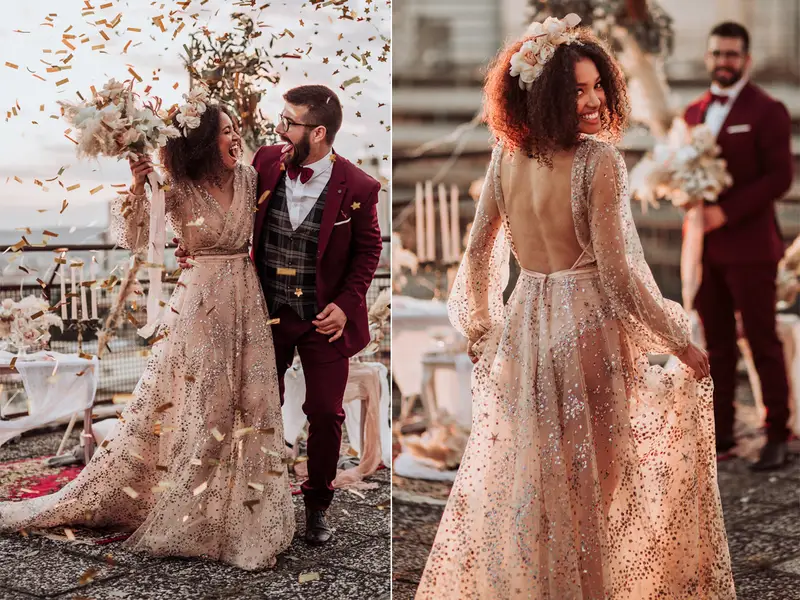
Wedding attire depends on the invitation, venue, season, culture and time of day.
If the invitation specifies black tie, cocktail, formal, semi formal or another dress code, follow it first.
For a typical semi formal or formal wedding, polished dresses, suits, tailored separates, dress shoes, elegant accessories and coordinated colors are usually appropriate.
What Not to Wear to a Wedding
Do not automatically assume that dressy means wearing the most dramatic outfit you own.
Be careful with:
- Clothing that appears too casual for the venue
- Extremely attention grabbing outfits that compete with the occasion
- Uncomfortable shoes you cannot walk in
- Clothing inappropriate for the ceremony’s cultural expectations
- White or bridal looking outfits when that could be disrespectful to the couple
Wedding traditions vary considerably so the invitation and hosts’ guidance should take priority.
What to Wear While Traveling
A practical travel outfit might include comfortable trousers or jeans, a breathable top, supportive shoes and a lightweight layer.
If you are visiting another country, research local clothing customs before packing. Dressing respectfully does not mean abandoning personal style. It means understanding the environment you are entering.
Travel experts have long recommended practical, understated clothing when visiting places with different cultural expectations particularly when clothing norms are more conservative.
What Not to Wear While Traveling
Avoid packing an entire wardrobe of clothing that works only for one situation.
Also reconsider:
- Shoes you have never worn before
- Extremely uncomfortable heels for walking heavy trips
- Clothing unsuitable for the local climate
- Valuable accessories that you do not need
- Outfits that ignore local dress expectations
A versatile scarf, lightweight jacket, comfortable trousers and shoes suitable for walking can often make a travel wardrobe much easier to manage.
What to Wear for Different Weather
Weather should influence both your outfit and your fabric choices.
Hot Weather
Choose breathable fabrics and lighter layers. Cotton, linen, lightweight blends and loose silhouettes can make warm weather dressing more comfortable.
Avoid unnecessarily heavy fabrics and excessive layering when temperatures are high.
Cold Weather
Use layers rather than relying on one extremely thick garment.
A practical combination might be:
Base layer → sweater → coat → weather-appropriate footwear
The advantage is flexibility. You can remove a layer indoors without completely changing your outfit.
Rainy Weather
Prioritize waterproof or water resistant outer layers and shoes with adequate traction.
A beautiful outfit is not very useful if your shoes become soaked after five minutes outside.
Why Fit Matters More Than Fashion Trends
A trendy garment can look unflattering when it is too tight, too loose, too long or too short for the intended silhouette. Conversely, a simple outfit can look sophisticated when the proportions are right.
Menswear style guidance, for example, consistently emphasizes avoiding both excessively tight and excessively loose clothing in favor of a fit that works with the wearer’s proportions.
That principle applies broadly.
Before buying something, check:
- Does the shoulder sit correctly?
- Can you move comfortably?
- Does the waistband dig in?
- Are sleeves and trouser lengths appropriate?
- Does it still look good from the side and back?
If the garment is almost perfect, a small alteration may make a bigger difference than buying something more expensive.
What Colors Should You Wear?
Neutral colors such as navy, black, gray, beige, cream, brown, and white are versatile foundations. You can then introduce stronger colors through a shirt, dress, jacket, scarf, handbag, shoes or another accessory.
The mistake is not necessarily wearing bright colors. The problem is using too many competing visual elements at once.
For example, if your jacket has a strong pattern, keeping the rest of the outfit relatively simple can create balance.
At formal or professional events, restrained color combinations are usually easier to style. At parties, festivals, concerts, or creative events more expressive colors may be completely appropriate.
What Shoes Should You Wear?
Shoes can change the entire impression of an outfit.
Choose footwear according to the activity:
| Occasion | Better Choices | Avoid |
| Everyday errands | Clean sneakers, flats, casual loafers | Uncomfortable formal shoes |
| Office | Loafers, dress shoes, polished flats | Dirty or worn footwear |
| Interview | Dress shoes, polished loafers, professional flats | Beach sandals or gym shoes |
| Wedding | Dress shoes, elegant flats, formal heels | Very worn sneakers |
| Travel | Comfortable walking shoes | Brand new shoes likely to cause discomfort |
| Outdoor event | Practical, weather appropriate shoes | Fragile footwear unsuitable for the ground |
The most stylish shoe is not necessarily the best shoe if you cannot comfortably walk in it.
Common What Not to Wear Mistakes
Some clothing mistakes have less to do with fashion and more to do with preparation.
Wearing the Wrong Dress Code
The biggest mistake is ignoring the setting. A beautiful outfit can still be wrong if it does not match the occasion.
Choosing Style Over Comfort
If you spend the entire event adjusting your clothes or dealing with painful shoes, the outfit has failed its practical purpose.
Following Every Trend
Trends are useful for inspiration, but not every trend suits every person, workplace, body proportion, age, lifestyle or occasion.
Wearing Poorly Maintained Clothing
Wrinkles, stains, loose threads, scuffed shoes and missing buttons can make an otherwise good outfit look unfinished.
Ignoring Cultural Expectations
Dress codes are not always written down. Religious sites, weddings, schools, workplaces and international destinations may have expectations that differ from what you are accustomed to.
Wearing Too Many Statement Pieces
A strong outfit usually has a visual hierarchy. Give the eye somewhere to focus.
A Simple Formula for Choosing an Outfit
When you are completely unsure what to wear, use this formula:
Occasion + Weather + Fit + Comfort + One Personal Detail
This approach is more useful than memorizing dozens of rigid fashion rules.
Final Thoughts
Knowing what to wear and not to wear is less about following a strict list of fashion rules and more about learning how to read the situation.
Start with the occasion. Consider the weather and environment. Choose clothing that fits well and allows you to move comfortably. Then add your own personality through color, accessories, texture, or styling.
Most importantly, do not confuse expensive clothing with good dressing. A simple, clean, well fitting outfit that respects the occasion will usually make a stronger impression than an expensive outfit chosen without considering the setting. Trust the basics, embrace comfortable tailoring, and let Samppy help you curate your signature style for any setting.
Frequently Asked Questions
What should you wear and not wear to look stylish?
Wear clean, well fitting clothing that suits the occasion and reflects your personal style. Avoid outfits that are poorly fitted, visibly damaged, uncomfortable, or inappropriate for the setting.
What is the biggest mistake when choosing an outfit?
Ignoring the occasion is one of the biggest mistakes. The same outfit can work beautifully in one environment and look completely inappropriate in another.
Should clothes be tight or loose?
Neither extreme is automatically better. The best fit allows comfortable movement while creating a balanced silhouette. Some styles are intentionally oversized, but oversized should still look deliberate rather than simply too large.
Is it better to be overdressed or underdressed?
When you genuinely cannot determine the dress code, being slightly more polished is often safer than being noticeably underdressed. However, the best solution is to check the invitation, venue, employer, or host whenever possible.
What should you not wear to a formal event?
Avoid obviously casual clothing, worn footwear, athletic wear, beachwear, and pieces that conflict with the stated dress code. Always follow the specific requirements of the event first.
How can I look better without buying new clothes?
Start with what you already own. Improve fit through tailoring, clean and maintain your shoes, coordinate colors more intentionally, remove unnecessary accessories, and create complete outfits rather than buying individual pieces without a plan.