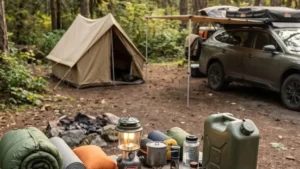
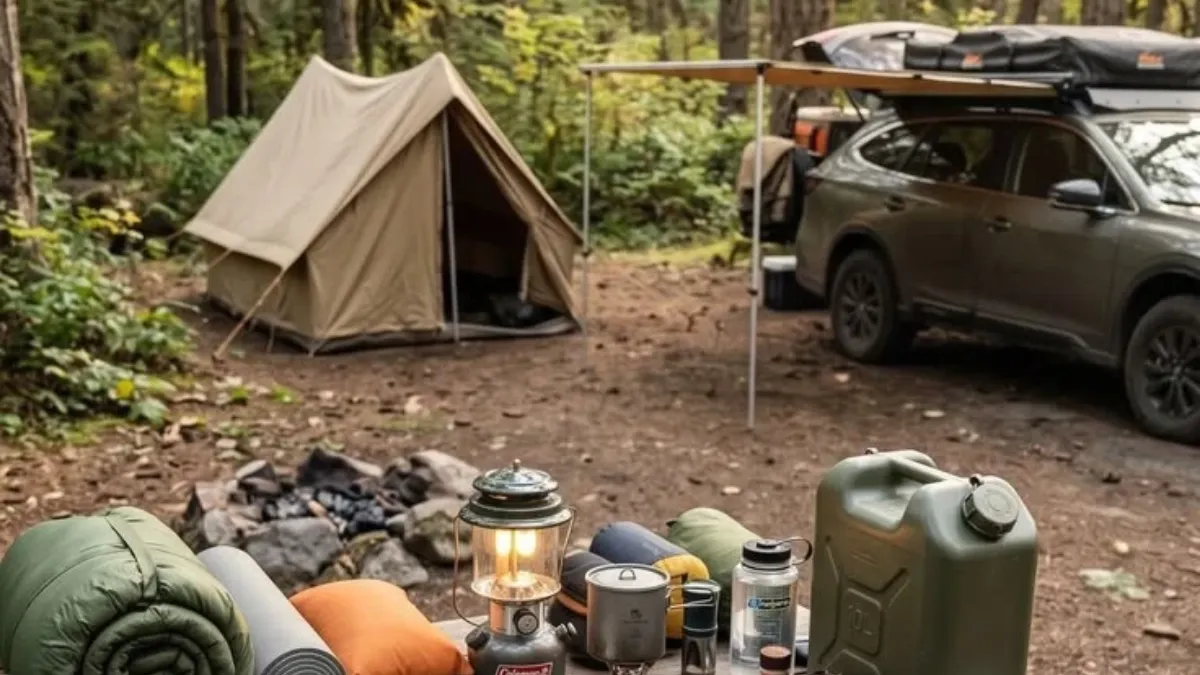
The Best Camping Gear Checklist 2026 helps you pack everything you need for a safe, comfortable, and enjoyable outdoor adventure. Whether you are planning a weekend camping trip, a family getaway, or a longer stay in the wilderness, having the right equipment can make your experience much easier. From tents and sleeping bags to cooking tools, lighting, and first-aid supplies, this checklist will help you prepare for your next camping trip without forgetting the essentials.
Whether you’re planning a weekend at a campground, a family getaway, or a remote backpacking trip, this guide will help you prepare without overpacking.
Quick Camping Gear Checklist
Before packing individual items, make sure you have the essentials covered.
- Tent, tarp, or suitable shelter
- Tent footprint, stakes, and repair supplies
- Sleeping bag or appropriate bedding
- Sleeping pad or air mattress
- Camping pillow
- Headlamp or flashlight
- Extra batteries or a charged power bank
- Drinking water and water-treatment supplies when needed
- Food and snacks
- Camping stove, fuel, and cooking equipment
- Plates, cups, and eating utensils
- Weather-appropriate clothing
- Rain jacket and warm layers
- First aid kit and personal medication
- Sunscreen and insect repellent
- Navigation tools and offline maps
- Toiletries and hygiene supplies
- Rubbish bags
- Emergency contacts and trip details
1. Shelter and Tent Equipment
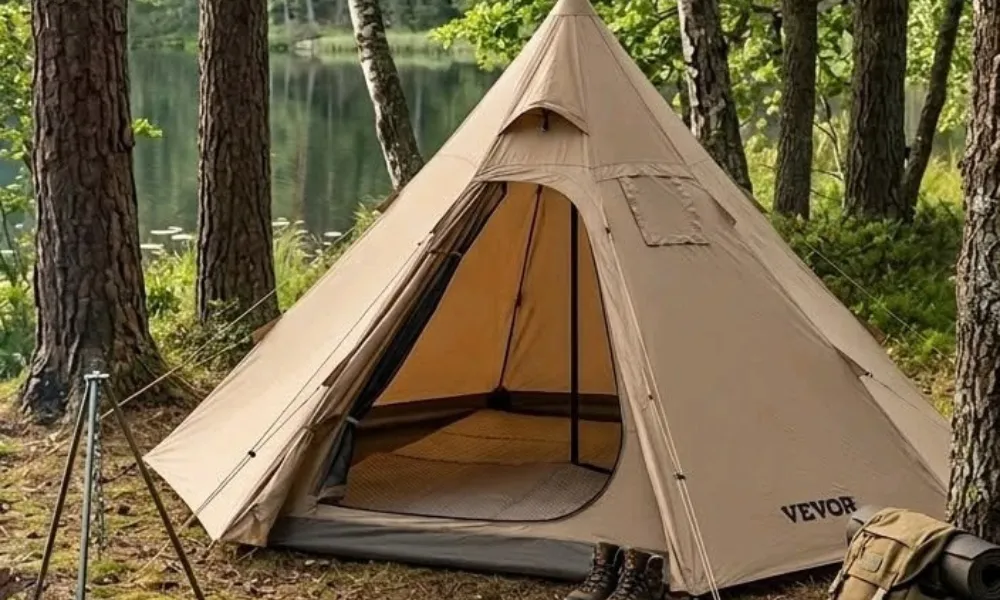
Your shelter protects you from rain, wind, insects, and changing temperatures. Choosing the right one is more important than bringing a long list of optional accessories.
- Tent with adequate sleeping capacity
- Rainfly or waterproof outer cover
- Tent footprint or correctly sized groundsheet
- Tent poles and stakes
- Mallet or suitable stake-setting tool
- Extra stakes and guy lines
- Tarp or rain shelter
- Tent repair tape or a small repair kit
- Door mat or ground mat
- Camping canopy for car camping, if needed
Choose a tent suited to the expected weather and the number of people using it. A little extra room can make sleeping and storing gear more comfortable.
Before leaving home, pitch the tent and check its poles, seams, zippers, and rainfly. A short practice setup can prevent frustrating surprises after dark.
2. Sleeping Gear for a Comfortable Night
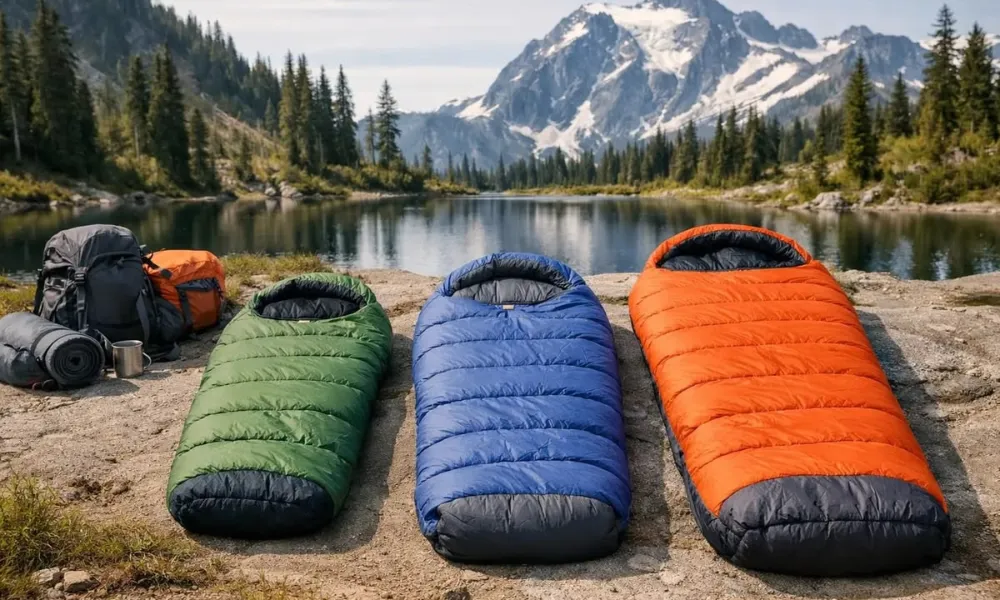
A good night’s sleep can make the difference between enjoying an outdoor adventure and spending the next day exhausted. Your sleeping equipment should match the lowest expected overnight temperature, not just the daytime forecast.
- Sleeping bag or camping quilt
- Insulated sleeping pad or air mattress
- Pillow or compact camping pillow
- Extra blanket for cold conditions
- Dry clothes reserved for sleeping
- Warm socks
- Eye mask and earplugs
- Air pump, if required
- Sleeping pad repair kit
Check the sleeping bag’s temperature rating and the pad’s insulation performance. A warm sleeping bag alone may not be enough if cold ground draws heat away from your body.
For car camping, a thicker mattress can improve comfort. For backpacking, prioritize equipment that balances warmth, packed size, and weight.
3. Camping Kitchen and Cooking Supplies
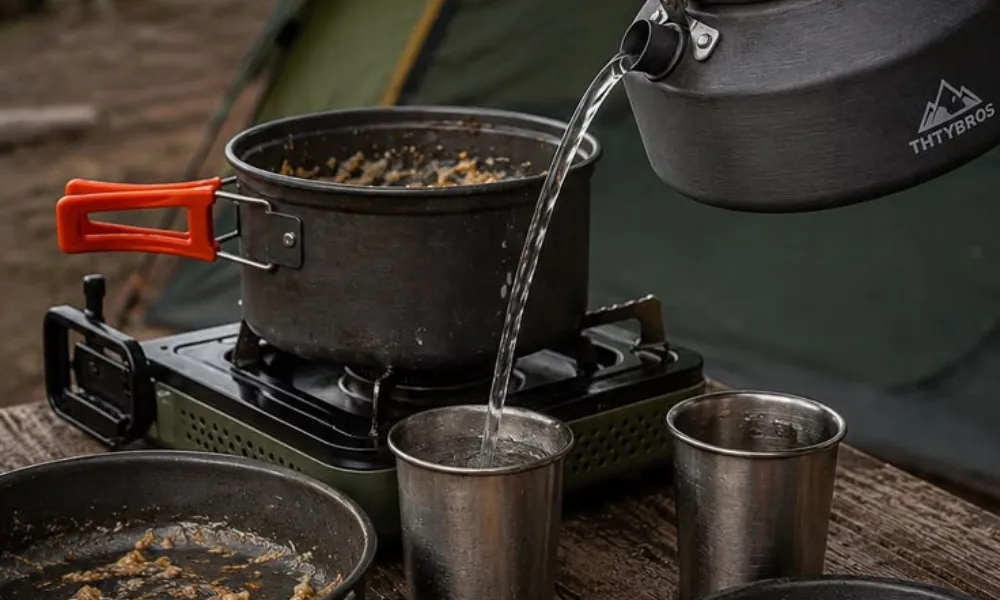
Cooking outdoors can be simple. You do not need a full kitchen, but you do need a safe way to prepare meals, store food, and clean your equipment.
- Camping stove
- Compatible fuel
- Lighter or waterproof matches
- Cooking pot and frying pan
- Cooking spoon, spatula, and tongs
- Sharp food-preparation knife
- Cutting board
- Plates, bowls, mugs, and cups
- Forks, spoons, and other utensils
- Can opener and bottle opener
- Cooler or insulated food bag
- Food-storage containers
- Water jug
- Dishwashing basin
- Sponge and suitable soap
- Kitchen towel and paper towels
- Aluminium foil and reusable food bags
- Rubbish bags
Test your stove before departure and bring only the fuel it requires. Always use camping stoves outdoors in well-ventilated areas, away from tent interiors and other enclosed spaces, because of fire and carbon monoxide risks.
Food to Pack for Camping
Plan meals around the length of your trip, available refrigeration, and cooking facilities.
- Breakfast items such as oats or cereal
- Bread, wraps, or crackers
- Rice, pasta, or other easy-to-cook staples
- Tinned or shelf-stable foods
- Fresh produce that travels well
- Nuts, dried fruit, and energy snacks
- Tea, coffee, or other preferred drinks
- Seasonings and cooking oil
- Emergency food portions
Keep perishable food at safe temperatures, separate raw foods from ready-to-eat items, and store food securely according to local wildlife guidance.
4. Water and Hydration Supplies
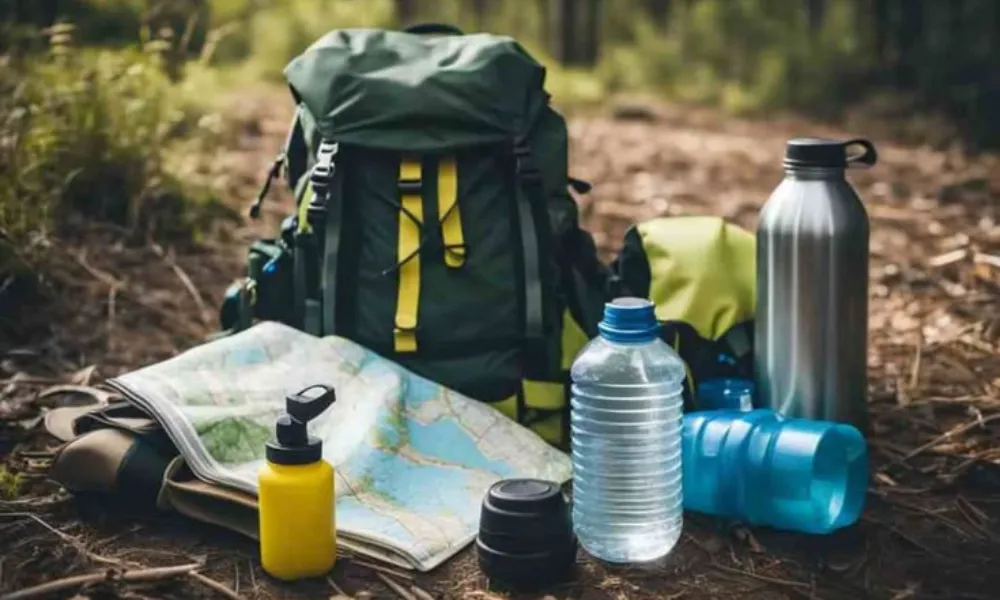
Water planning deserves special attention, particularly for hot-weather trips, long hikes, and remote campsites.
- Reusable water bottles
- Water-storage containers
- Water filter or purifier, when appropriate
- Water-treatment tablets as a backup
- Electrolyte supplies, if useful for your activity
- Extra water for cooking and cleaning
Find out whether drinking water is available at your campsite. If you are relying on natural water sources, do not assume that clear water is safe to drink. Use a treatment method appropriate to the likely contaminants.
Carry enough water for the route, weather, activity level, and any delays you might encounter.
5. Clothing and Footwear
Camping weather can change quickly, even when the forecast looks promising. Pack clothing in layers so you can adjust to heat, cold, wind, and rain.
- Moisture-wicking shirts
- Comfortable trousers or hiking pants
- Shorts for warm conditions
- Underwear and spare socks
- Fleece or insulating mid-layer
- Warm jacket
- Waterproof rain jacket
- Rain trousers when conditions warrant
- Hiking shoes or boots suited to the terrain
- Comfortable camp footwear
- Sun hat or cap
- Warm hat and gloves for cold weather
- Sleepwear
- Sunglasses
- Swimwear and quick-dry towel, if needed
Keep a dry set of clothing protected inside a waterproof bag. Avoid relying on cotton as your only clothing layer in cold or wet conditions, because it can remain damp and lose much of its insulating value.
6. Lighting and Power Equipment
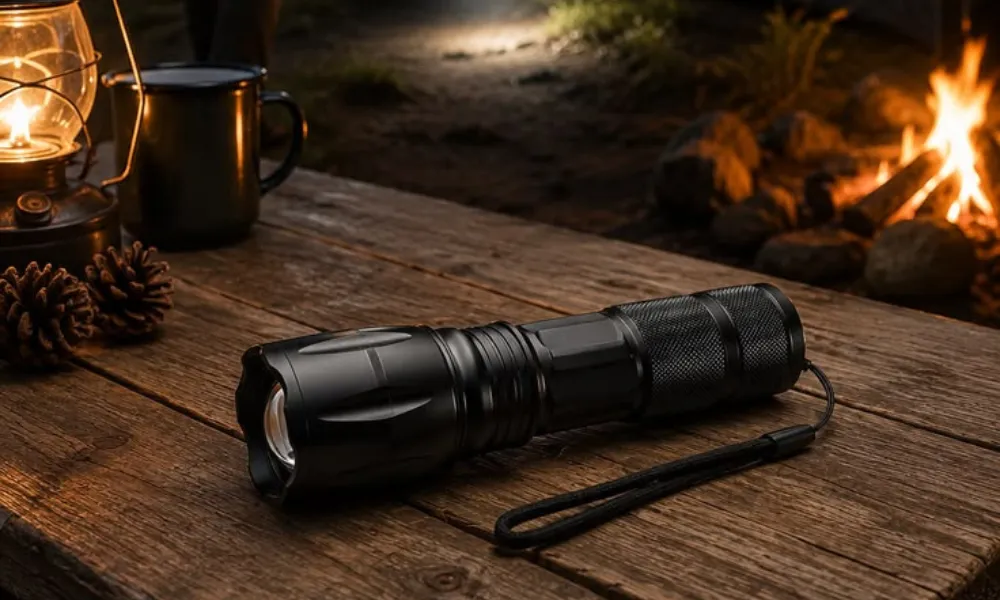
Once daylight fades, even familiar surroundings can become difficult to navigate. Reliable lighting is essential for cooking, moving around camp, and finding your way to facilities at night.
- Headlamp for each camper
- Spare batteries or charging cable
- Camping lantern
- Backup flashlight
- Fully charged power bank
- Phone charging cable
- Portable solar charger, if useful for a longer trip
- Spare light source
A headlamp is particularly useful because it keeps your hands free. Test your lights before leaving, and avoid relying exclusively on your phone for illumination.
7. First Aid and Safety Equipment
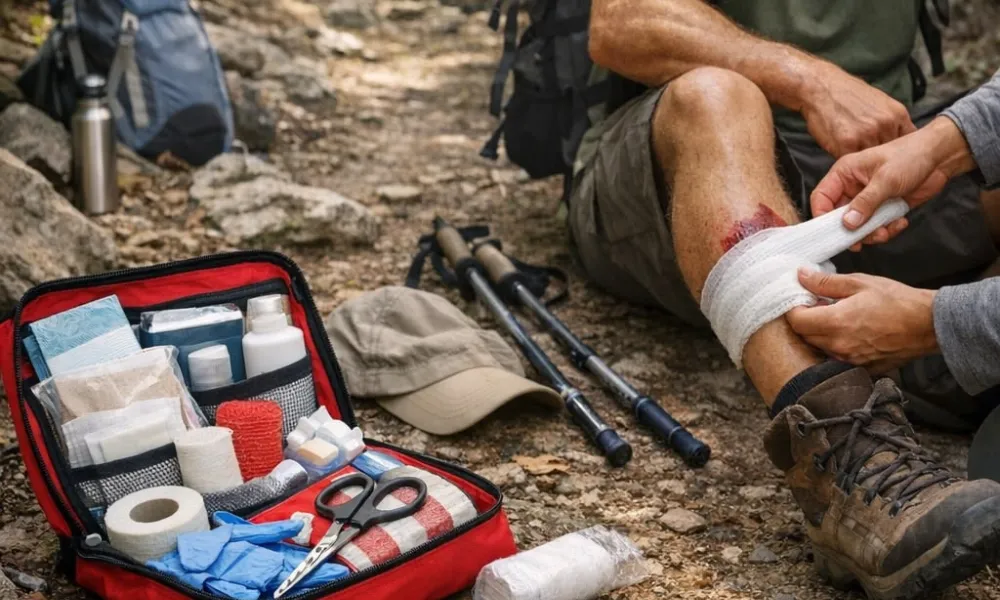
A first aid kit should reflect the location, duration, activities, and size of your group. For remote trips, preparation matters even more because professional help may not be immediately available.
- First aid kit
- Personal prescription medication
- Adhesive bandages and wound dressings
- Blister-care supplies
- Antiseptic suitable for first aid
- Tweezers
- Medical tape and gauze
- Insect repellent
- Sunscreen
- Sun-protective lip balm
- Emergency whistle
- Multi-tool or suitable repair tool
- Emergency blanket
- Map, compass, or reliable navigation device
- Emergency contact information
- Personal locator beacon or satellite communicator for suitable remote trips
Learn how to use your navigation and emergency equipment before you need it. Tell someone where you are going and when you expect to return, especially if you will be travelling beyond mobile coverage.
8. Toiletries and Personal Hygiene
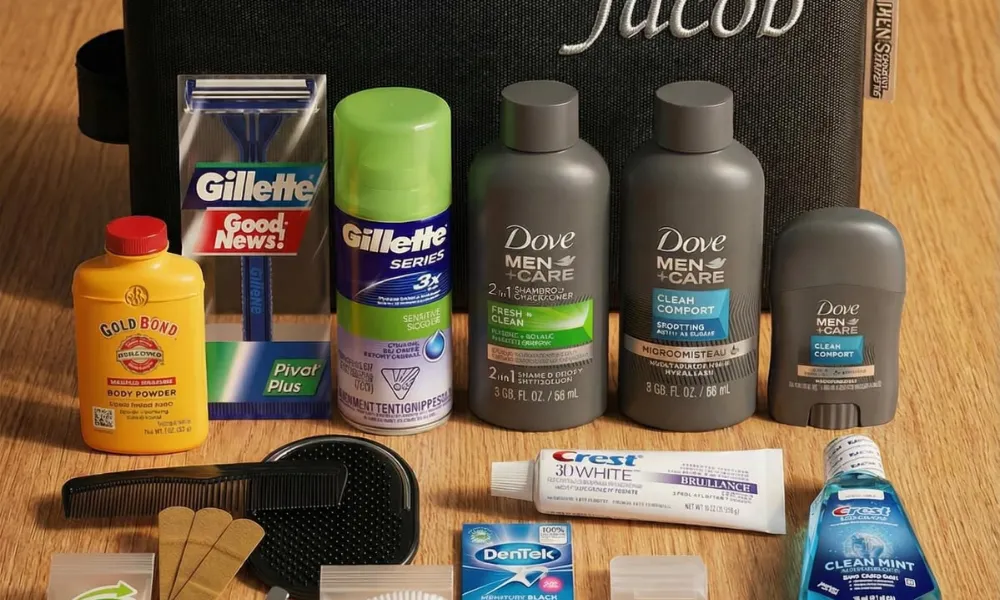
A small hygiene kit helps keep you comfortable and reduces the risk of illness during a trip.
- Toothbrush and toothpaste
- Biodegradable or campsite-appropriate soap
- Shampoo, if needed
- Quick-drying towel
- Toilet paper
- Hand sanitizer
- Wet wipes
- Deodorant
- Hairbrush or comb
- Personal hygiene products
- Prescription and essential personal care items
- Small toiletry bag
- Portable toilet supplies, where facilities are unavailable
Follow the campsite’s rules for washing, wastewater disposal, and toilet use. Products labelled biodegradable should not automatically be used directly in lakes, streams, or other natural water sources.
9. Tools, Repairs, and Campsite Accessories
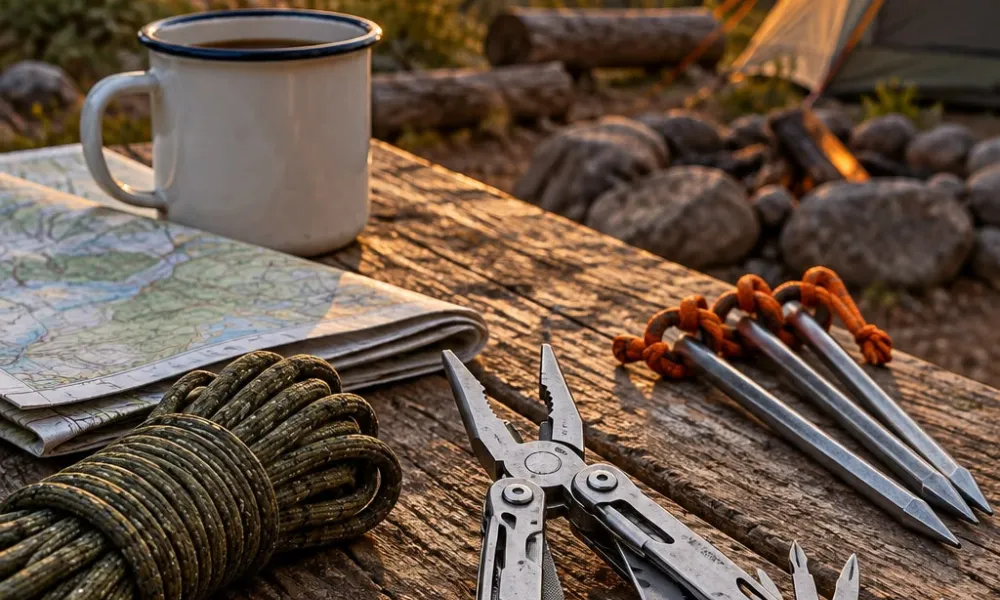
These practical extras help you manage small problems without carrying an entire toolbox.
- Multi-tool
- Duct or gear-repair tape
- Paracord or suitable utility cord
- Small repair kit
- Spare tent stakes
- Small scissors
- Dry bags or waterproof storage sacks
- Reusable rubbish bags
- Camp chairs
- Folding table for car camping
- Binoculars
- Notebook and pen
- Cards, books, or compact games
For car camping, chairs and a folding table can make the campsite more comfortable. For backpacking, leave bulky furniture behind and choose compact, multipurpose equipment.
10. Optional Gear for a More Enjoyable Trip
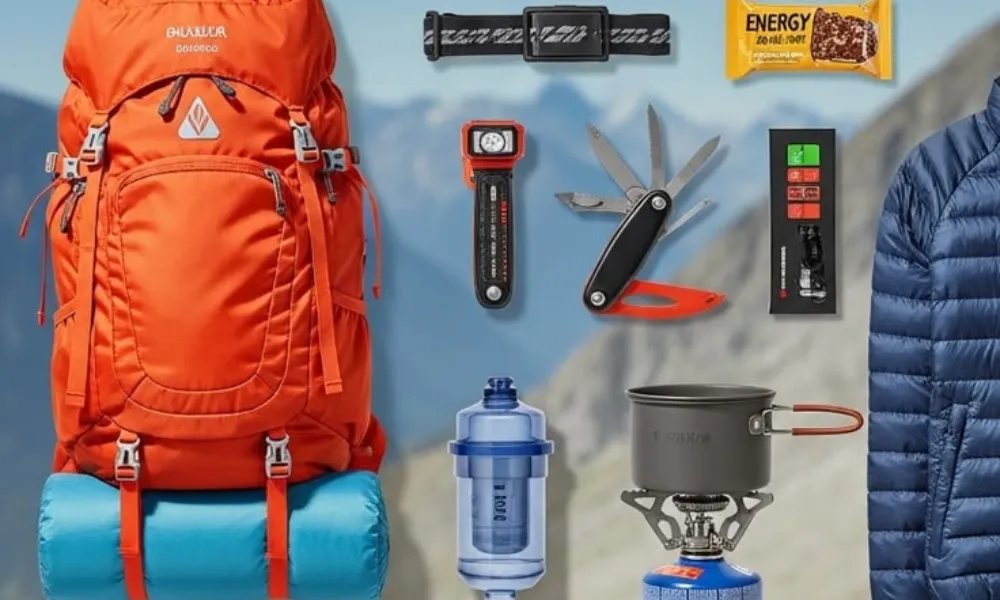
Once the essentials are covered, consider a few extras that fit your interests.
- Hammock and suspension straps
- Portable coffee maker
- Camping shower
- Trekking poles
- Camera
- Binoculars or a field guide
- Fishing equipment, where permitted
- Compact camping games
- Camp blanket
- Lightweight solar panel
- Portable power station for car camping
- Waterproof bags for electronics
Optional gear should add genuine value rather than simply take up space. Choose items that suit your activities, campsite facilities, and transport arrangements.
11. Camping Gear Checklist by Trip Type
Not every camping trip requires the same equipment. Use this comparison to narrow your packing list.
| Gear category | Car camping | Backpacking | Family camping |
| Shelter | Roomier tent | Lightweight tent or shelter | Spacious family tent |
| Sleeping | Thick pad or mattress | Lightweight insulated pad | Individual sleeping bags and pads |
| Cooking | Larger stove and cookware | Compact stove and pot | Simple group cooking setup |
| Lighting | Headlamps and lanterns | Headlamp and backup light | Headlamp for each person plus lantern |
| Water | Storage jugs and bottles | Lightweight containers and treatment | Extra drinking-water capacity |
| Comfort | Chairs and table | Minimal extras | Chairs, shade, and activity supplies |
| Safety | First aid and navigation | First aid, navigation, emergency gear | First aid, child-specific supplies, and trip plan |
Backpacking requires careful attention to total weight. Car camping allows more comfort items, while family trips often benefit from extra clothing, snacks, shade, and supplies for keeping children occupied.
12. What to Check Before Leaving Home
Packing the right equipment is only part of preparing for a safe trip.
- Check the weather forecast and overnight low.
- Confirm campsite reservations, permits, and access rules.
- Check fire restrictions and local wildlife guidance.
- Test your tent and sleeping equipment.
- Charge phones, headlamps, and power banks.
- Confirm your stove works and fuel is compatible.
- Pack food safely and carry adequate water.
- Download maps for offline use.
- Share your itinerary with someone you trust.
- Check your vehicle and spare tyre if driving.
- Tell your group where first aid and emergency equipment are stored.
If the forecast includes severe weather, dangerous heat, flooding, or other hazardous conditions, change your plans when necessary rather than relying on equipment alone.
Final Thoughts
The best camping gear checklist for 2026 is not about bringing everything you own. It is about choosing equipment that keeps you sheltered, warm, hydrated, well-fed, and prepared for unexpected changes. Planning your meals is equally important, whether you’re cooking at the campsite or exploring local dining options, such as these best restaurants in Seneca, SC.
Start with the essentials, check your equipment before departure, and add comfort items according to your camping style. If you prefer a more comfortable travel experience on another trip, explore these 15 best hotels in Paris for accommodation options that can make your city getaway more enjoyable. With a thoughtful packing plan, you can spend less time worrying about what you forgot and more time enjoying the outdoors.
Frequently Asked Questions
What is the most important camping gear?
The most important items are a suitable shelter, a sleeping system matched to the weather, drinking water, food, reliable lighting, appropriate clothing, and safety equipment. The exact list depends on your destination and activities.
What should a beginner bring on their first camping trip?
Start with a tent, sleeping bag, sleeping pad, headlamp, water bottles, easy meals, a basic cooking setup, suitable clothing, toiletries, and a first aid kit. Borrowing or renting expensive equipment can be sensible until you know which camping style you enjoy.
How much camping gear do I need for a weekend?
For a two-night trip, you generally need shelter, bedding, food, water, clothing for changing weather, cooking equipment, lighting, hygiene supplies, and emergency essentials. The amount of extra gear depends on whether you are driving to a campsite or carrying everything on foot.
What camping gear should I buy first?
Prioritize the equipment that protects you from the elements and supports safe sleep: a suitable shelter, sleeping bag or quilt, sleeping pad, and dependable lighting. Next, invest in appropriate footwear, clothing, water supplies, and cooking equipment.
What should I pack for camping in cold weather?
Bring a sleeping bag suitable for the expected temperatures, an insulated sleeping pad, thermal layers, a warm jacket, a hat, gloves, dry socks, and waterproof outerwear. Check the forecast carefully and avoid depending on a campfire as your only source of warmth.
How can I avoid overpacking?
Build your checklist around the weather, trip length, campsite facilities, and activities. Choose multipurpose items, plan meals in advance, and leave optional equipment at home if it adds weight without serving a clear purpose.
Disclaimer: This content is for informational and entertainment purposes only and reflects our personal opinions and experiences. We just love to write and share what we observe along the way. Best camping gear checklist 2026