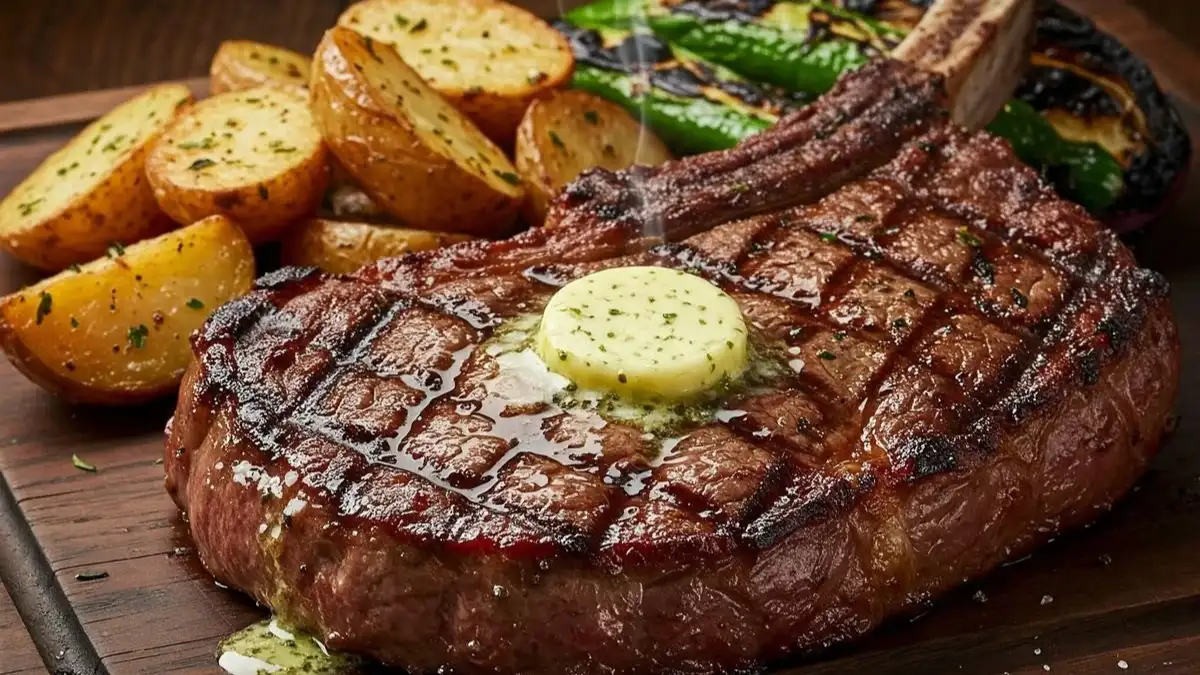
There is something special about a steak that arrives at the table sizzling, with a deep brown crust, a rich buttery aroma, and a large bone that makes the whole cut look almost theatrical. The cowboy steak is exactly that kind of meal. It is bold, generous, and surprisingly simple to prepare when you understand how its thickness affects cooking.
A cowboy steak is a thick, bone-in ribeye steak, usually cut from the beef rib section with a relatively short rib bone. It is prized for its marbling, tenderness, and rich beef flavor. The bone gives it a dramatic appearance, but the real appeal is the ribeye meat itself, which can become beautifully browned outside and juicy inside.
You do not need a professional steakhouse kitchen to cook one well. A hot skillet or grill, a reliable thermometer, and a little patience can make all the difference.
What Is Cowboy Steak?
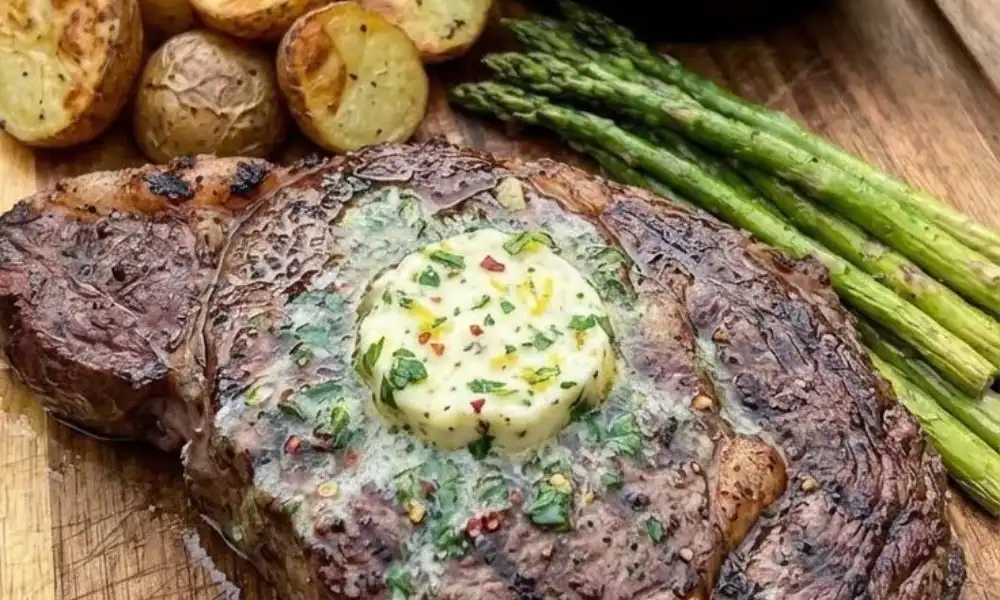
A cowboy steak is essentially a bone-in ribeye cut thick enough to make a substantial main course. It typically includes the ribeye’s central eye of meat and the surrounding fatty sections that contribute to its flavor and texture.
The precise thickness varies by butcher, but cowboy steaks are often around 1½ to 2½ inches thick. Their size makes them ideal for cooking with a combination of high heat and gentler finishing heat.
The bone is part of the steak’s appeal, although it should not be assumed to make the meat automatically more flavorful. Good marbling, proper seasoning, and careful cooking matter much more.
Cowboy Steak vs. Tomahawk Steak
These two steaks come from the same general rib section, so it is easy to confuse them. The main difference is the bone.
| Feature | Cowboy Steak | Tomahawk Steak |
| Cut | Bone-in ribeye | Bone-in ribeye |
| Bone | Shorter, trimmed rib bone | Long, exposed rib bone |
| Appearance | Thick and compact | Dramatic, long-bone presentation |
| Flavor | Rich and beefy | Rich and beefy |
| Cooking method | Grill, skillet, or reverse sear | Grill, skillet, or reverse sear |
Both can deliver excellent results. A tomahawk often costs more because of its presentation and weight, but the longer bone does not necessarily mean you are getting more edible steak.
Ingredients for Cowboy Steak
For one large steak, gather:
- 1 cowboy steak, approximately 1½–2 inches thick
- 1–2 teaspoons kosher salt, adjusted to the steak’s size
- Freshly ground black pepper
- 1 tablespoon neutral high-heat cooking oil
- 2 tablespoons unsalted butter
- 2 garlic cloves, lightly crushed
- 2 sprigs fresh rosemary or thyme
The herbs, butter, and garlic are optional. A well-marbled ribeye can be delicious with nothing more than salt and pepper.
How to Cook Cowboy Steak
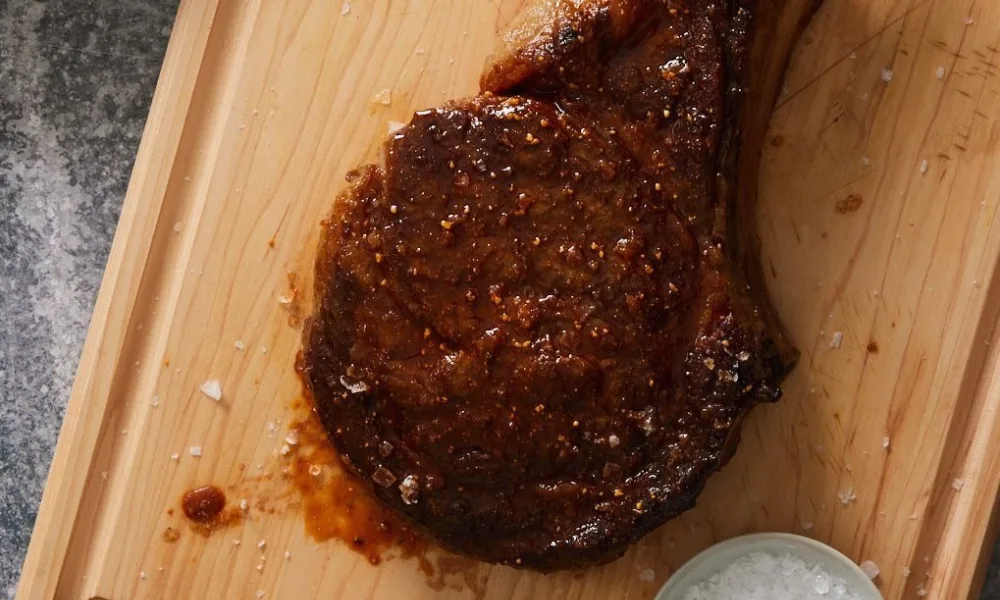
The secret to a great cowboy steak is to develop a rich crust without burning the outside before the center reaches your preferred doneness. For a thick cut, a reverse sear is particularly useful.
1. Prepare and season the steak
Pat the steak dry with paper towels. Moisture on the surface makes browning more difficult.
Season generously with salt and pepper. If you have time, salt the steak and leave it uncovered in the refrigerator for several hours or overnight. This helps season the meat and dry the surface.
Take the steak out while you prepare your cooking equipment. There is no need to leave raw meat sitting out for an extended period.
2. Cook the steak gently first
Preheat your oven to 250°F (120°C). Place the steak on a rack set over a baking tray and cook until the center approaches your desired final temperature.
For a thick steak, this may take roughly 30–60 minutes, but thickness, starting temperature, and oven accuracy can change the timing considerably. Use a meat thermometer rather than relying on the clock.
For a medium-rare finish, you might remove the steak from the oven when the center reaches approximately 110–115°F (43–46°C), then finish it in a hot pan. The final temperature will rise during searing and resting.
3. Sear for a deep brown crust
Heat a heavy skillet, preferably cast iron, until very hot. Add the oil, then carefully place the steak in the pan.
Sear each broad side until a deep brown crust forms, usually around 1–2 minutes per side depending on the heat and surface. Briefly sear the edges as well.
If you prefer to cook entirely on a grill, use a cooler zone to bring the steak toward the desired doneness, then move it over direct heat to finish the crust.
4. Add butter, garlic, and herbs
Lower the skillet heat slightly. Add the butter, crushed garlic, and rosemary or thyme.
Tilt the pan carefully and spoon the foaming butter over the steak for about 30–60 seconds. Keep the garlic from burning, as burnt garlic can turn bitter.
5. Check the temperature and rest
Insert the thermometer into the thickest part of the meat, avoiding the bone.
For food safety, the USDA recommends that whole beef steaks reach an internal temperature of 145°F (63°C), followed by at least a three-minute rest. If you prefer a lower doneness level, understand that it falls below this safety recommendation.
Rest the steak before slicing so the temperature can stabilize and the juices are less likely to run out immediately. Slice against the grain and serve the meat with the bone alongside it.
Cowboy Steak Cooking Temperatures
The following are common culinary doneness targets, not substitutes for food-safety guidance.
| Doneness | Approximate final temperature |
| Rare | 120–125°F (49–52°C) |
| Medium-rare | 130–135°F (54–57°C) |
| Medium | 140–145°F (60–63°C) |
| Medium-well | 150–155°F (66–68°C) |
| Well-done | 160°F (71°C) or above |
Temperatures can continue rising after the steak leaves the heat. For the most reliable result, monitor the center with a thermometer and account for carryover cooking.
What to Serve With Cowboy Steak
Because cowboy steak is rich and substantial, sides that add freshness or contrast work particularly well. For more inspiration, explore these steakhouse-style sides and discover how to build a satisfying steak dinner.
Roasted potatoes: Crisp edges and fluffy centers make potatoes a natural partner for ribeye. Grilled asparagus: A little char and a squeeze of lemon balance the steak’s richness. Garlic mushrooms: Their earthy flavor complements the beef without competing with it.
Fresh green salad: A sharp vinaigrette brings brightness to a heavy meal. You can also try this fresh green salad for a refreshing contrast to the steak’s rich flavor.
Creamy mashed potatoes: Choose these when you want a classic steakhouse-style dinner. For sauce, try chimichurri for a fresh, herbaceous finish or a simple peppercorn sauce for something richer.
Common Cowboy Steak Cooking Mistakes
Cooking by time alone
A thick steak can look ready on the outside while remaining much cooler in the center. A thermometer is more reliable than a timer.
Skipping the surface-drying step
A wet steak tends to steam before it browns. Patting it dry helps create the crust that makes a great ribeye so appealing.
Using too much heat throughout
High heat is excellent for searing but can burn the exterior before the middle cooks. Combining gentler cooking with a final sear gives you more control.
Cutting the steak immediately
Allowing the steak to rest helps reduce immediate juice loss when you slice it.
Overcomplicating the seasoning
A cowboy steak already has plenty of natural flavor. Salt, pepper, and a little butter are often all you need.
Final Thoughts
A cowboy steak makes an ordinary dinner feel like an occasion, but the best results come from keeping the process straightforward. Start with a good-quality, well-marbled cut, season it properly, cook it gently if it is thick, and finish with a hot sear for that deep brown crust.
Serve it with crisp potatoes, a fresh vegetable, and a sauce you genuinely enjoy. If you want more inspiration for everyday meals, explore these easy dinner recipes. The result is a satisfying steakhouse-style meal that lets the beef take center stage.
Frequently Asked Questions
Is a cowboy steak the same as a ribeye?
A cowboy steak is a type of bone-in ribeye. The main distinction is its presentation and the length of the rib bone.
Is cowboy steak tender?
Yes, it is generally tender when cut and cooked properly. Its marbling contributes to a rich texture, although quality and cooking technique still matter.
Can you cook cowboy steak in a pan?
Absolutely. A heavy skillet works well, particularly when you use a gentle cooking stage followed by a hot sear. Very thick steaks benefit from this two-stage approach.
How much cowboy steak should I buy per person?
A large bone-in steak can weigh well over a pound, including the bone. Depending on its size and the sides served, one steak may be enough for two people. Ask your butcher about the actual meat-to-bone ratio.
Why is cowboy steak expensive?
It comes from a popular premium section of beef, and thick cuts require substantial meat. Price also depends on grade, sourcing, trimming, and local availability.
Disclaimer: This article is intended for informational purposes only.