The average dinner party host spends more time worrying about the guest list than the food, according to surveys of home entertainers, and yet the guest list is exactly where elegance begins. A private dinner party lives or dies on the guest list, the seating plan, and the first fifteen minutes. Get those three right and even a simple menu feels luxurious. Get them wrong and no amount of truffle oil will save the evening. (How to Plan a Bespoke Luxury Vacation That Delivers)
This guide walks through the practical mechanics of an elegant private dinner: how many people to invite, when to send invitations, how to build a menu that doesn’t trap the host in the kitchen, and which small details quietly signal that someone thought about the evening in advance.
Start with the guest list, not the menu
The most common mistake hosts make is inviting too many people. A seated dinner works best somewhere between six and twelve guests. Below six, the table can feel thin and the conversation fragile. Above twelve, the table splits into side conversations and the host loses control of the room.
The second most common mistake is inviting only people who already know each other. A table of old friends is comfortable but flat. A table of strangers is tense. The sweet spot is a mix: two or three clusters of people who know each other, plus a few guests who connect the clusters.
Before confirming anyone, ask three questions about each potential guest:
- Will this person contribute to a conversation instead of only consuming it?
- Does this person have at least one clear point of overlap with two other guests?
- Is this person comfortable being seated next to someone they don’t know?
If the answer to the third question is no, that guest may still be lovely but probably belongs at a larger, looser gathering rather than an intimate dinner.
Set the date and send invitations properly
Formal printed invitations traditionally go out three to four weeks ahead, and informal ones one to two weeks ahead. The exact timing matters less than the consistency: pick a lead time and stick to it, because a guest who receives an invitation five days out will assume they were a late addition.
For an elegant private dinner, a digital invitation is perfectly acceptable, provided it does three things:
- States the arrival time and the dinner time separately (for example, “7:00 for 7:30”)
- Names the dress code, even if the answer is “smart casual”
- Asks directly about allergies and dietary restrictions
That last point is not optional. Asking about restrictions at the RSVP stage is now standard practice, and it saves the host from a last-minute scramble. The UK’s Food Standards Agency publishes clear guidance on allergen information that is worth reading before finalising a menu, particularly if any guest has disclosed an allergy.
Build a menu you can actually execute
The menu is where ambitious hosts overreach. A four-course dinner cooked entirely à la minute by one person is a recipe for a stressed host and a delayed table. The practical rule is simple: no more than one dish should require the host’s active attention during the meal itself.
A workable structure looks like this:
| Course | What it should do | Host effort during dinner |
|---|---|---|
| Aperitif and bites | Buy time, loosen the room | None |
| Starter | Set the tone, be light | Low |
| Main | Be the anchor, be warm | Medium to high |
| Dessert | Close gently, be make-ahead | None |
The starter and dessert should be entirely prepared before guests arrive. That leaves the main course as the only moving part. If the main is a roast, a braise, or a tray bake, the host can plate and serve without disappearing for twenty minutes. If the main is a pan-seared fillet for eight people, the host will be chained to the stove.
Hosts who want a more ambitious centrepiece often find that a well-planned chicken main delivers the elegance without the risk; a collection of healthy chicken breast dinner recipes covers everything from a simple roast to a more involved stuffed preparation, and most of them can be prepped in advance.
Keep the courses to three or four
Etiquette guidance from established authorities such as the Emily Post Institute consistently favours restraint over abundance. Three courses is elegant. Four is generous. Five is a banquet, and a banquet is a different event with different expectations.
If the host wants to signal occasion without adding courses, the better lever is the aperitif: a proper drink and a small bite served away from the table, thirty to forty-five minutes before seating. This single detail does more for the atmosphere of an evening than an extra course ever will.
Plan the seating before the day, not on it
Seating is the detail guests notice least and feel most. A good plan is invisible; a bad one is felt immediately as a guest realises they have been placed next to someone with whom they have nothing in common.
The long-standing convention is to alternate guests by interest and to separate couples. The reasoning is straightforward: couples default to each other, and guests placed beside someone with a shared interest have an immediate entry point. A few practical refinements:
- Seat the shyest guest next to the most socially fluent one, not next to another shy guest.
- Place the host or hostess at a position where they can see the whole table, usually the seat nearest the kitchen door.
- Avoid seating two strong personalities directly opposite each other if the topic is likely to be contentious.
- Put the guest of honour, if there is one, to the host’s right.
For a table of eight, sketch the plan on paper the day before and check every pairing. If any pairing makes the host wince, move it.
Set the table with intention
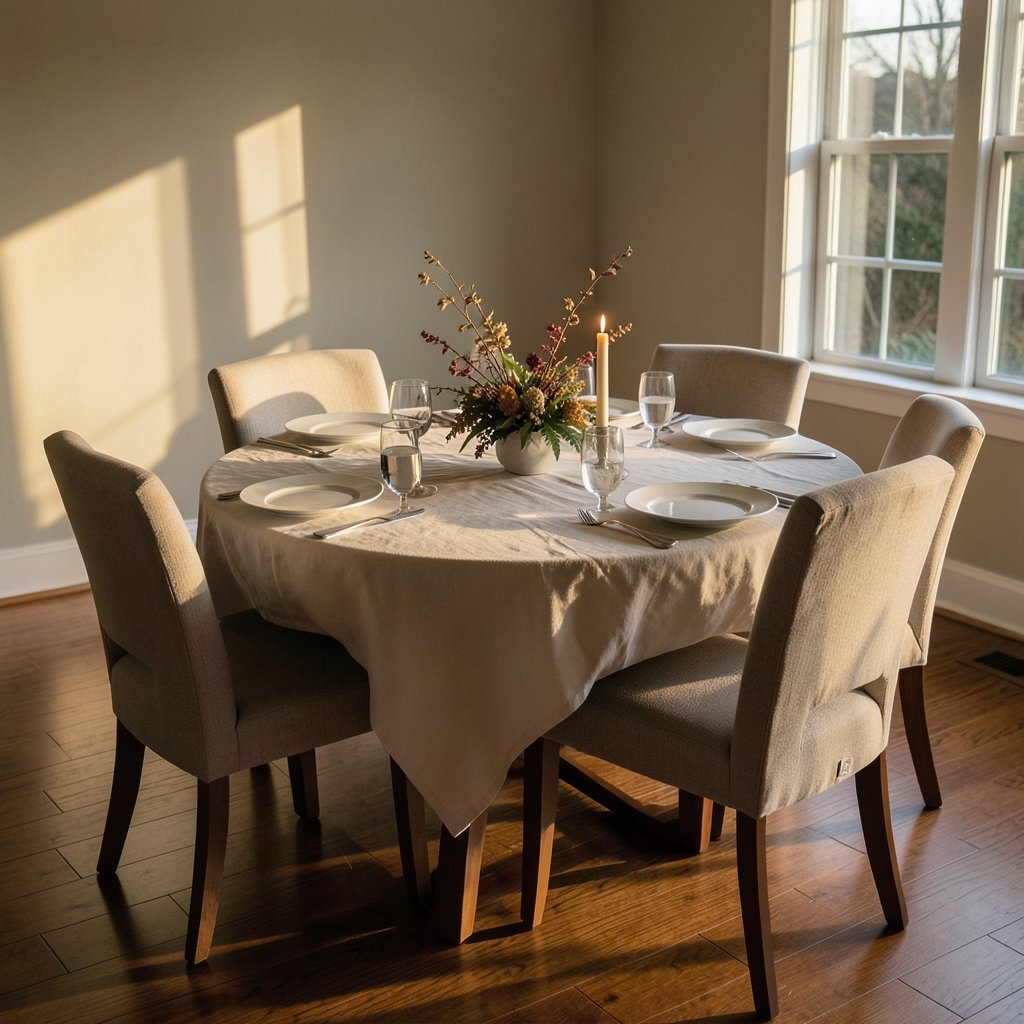
A formal place setting follows a simple rule: forks on the left, knives and spoons on the right, glasses at the upper right, and utensils used from the outside in. Once that rule is understood, the setting becomes almost automatic.
The details that read as elegant, in order of impact:
- Real napkins, cloth rather than paper, folded simply
- Glasses that match the drinks actually being served, not a full array of stemware used for one wine
- Candles at or below eye level, so guests can see each other across the table
- A centrepiece low enough to talk over, or none at all
- No more than three utensils per side, because excess cutlery reads as anxiety rather than formality
The single most common table-setting error is a centrepiece so tall that guests spend the evening leaning sideways to make eye contact. Flowers should sit below the sightline.
Manage the first fifteen minutes
Guests arrive in a burst. The first fifteen minutes set the tone for the whole evening, and they are the moment when a host most often loses control of the schedule by getting pulled into the kitchen. (Expert Advice)
The fix is to have everything ready before the doorbell rings: aperitif poured, bites plated and out, music low, lighting set. Then the host does nothing but greet, take coats, hand out drinks, and make one or two introductions. A host who is calm at the door produces calm guests.
Music deserves a specific mention. A playlist that runs from arrival through dessert, at a volume low enough that nobody raises their voice, does more for atmosphere than any decorative element. The most common mistake is music loud enough to force guests to lean in, which fragments the room.
Handle drinks without overcomplicating them
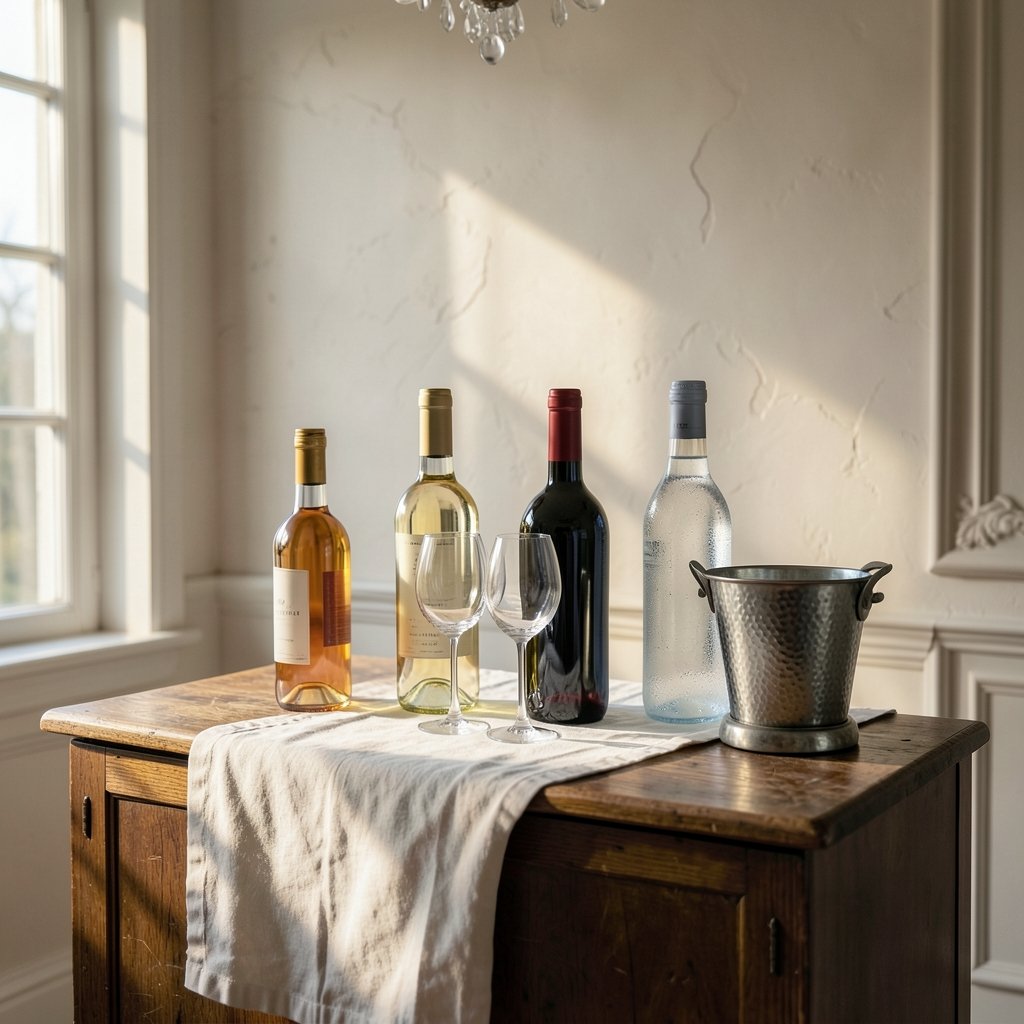
An elegant drinks plan is short: one aperitif, one white, one red, and something non-alcoholic that isn’t an afterthought. That is enough. A long cocktail list signals effort in the wrong direction and slows service.
For hosts who want to serve wine properly, the Wine & Spirit Education Trust is a useful reference for service temperatures and glassware, and its guidance is practical rather than intimidating. The key points that actually matter at a private dinner are serving whites cold enough, opening reds in advance, and offering water continuously.
Non-alcoholic options deserve the same care as the wine. A guest who is not drinking should not be handed a glass of tap water while everyone else has something considered. A single well-made non-alcoholic aperitif, served in the same glassware, solves the problem entirely.
Plan the timing backwards from the table
Timing is where elegant dinners quietly fall apart. The most reliable method is to work backwards from the moment guests sit down.
A typical schedule for a 7:30 seating:
- 7:00 – Guests arrive, aperitif and bites served away from the table
- 7:30 – Guests move to the table, starter already plated
- 7:50 – Starter cleared, main goes into its final stage
- 8:15 – Main served
- 9:00 – Main cleared, dessert plated from the fridge
- 9:20 – Coffee and something small, if wanted
- 10:00 – Guests drift toward the door
The schedule is a guide, not a script. The point is that the host knows, at every moment, what happens next and what is already done.
Build in a graceful ending
The end of a dinner party is as planned as the beginning. Guests leave well when there is a clear, gentle signal: coffee served, lights slightly raised, and the host standing rather than settling deeper into a chair.
Hosts who entertain often find that the same planning discipline that makes a dinner party work also makes a short trip work; the principles of a well-planned weekend getaway map almost exactly onto a dinner party, from the advance booking to the moment of arrival. The same is true of larger events, where the planning load grows but the structure stays identical. (Nutrition)
What actually separates an elegant dinner from a nice one
The difference is rarely money. It is preparation. An elegant dinner is one where the host is present, the table has been thought about, and nothing on the night requires improvisation. Guests read that calm as sophistication, even if the menu was a one-pot braise and the wine came from a supermarket.
The hosts who get this right tend to share four habits:
- They invite fewer people than they could.
- They cook one ambitious thing and buy or pre-make the rest.
- They plan the seating on paper.
- They finish the schedule before the first guest arrives.
None of those habits is expensive. All of them are noticeable.
Conclusion
An elegant private dinner party is a planning exercise disguised as a social one. The guest list sets the ceiling on how good the evening can be. The menu determines whether the host is present or absent. The seating plan decides which conversations happen. The table setting and the first fifteen minutes decide how the evening feels.
Get those elements right and the dinner will read as effortless, which is the whole point. Get them wrong and the host will spend the night in the kitchen while the guests politely wonder when the main course is coming.
Frequently asked questions
How many guests should I invite to a private dinner party?
Six to twelve guests is the practical range for a seated dinner. Below six, the table can feel thin. Above twelve, conversation splits into separate clusters and the host loses the room. Eight is often cited as the sweet spot because it allows a single conversation but still gives variety.
When should I send invitations for a dinner party?
Formal printed invitations traditionally go out three to four weeks ahead; informal ones one to two weeks ahead. The important thing is consistency. An invitation that arrives five days before the event makes the guest feel like a late addition.
Should I ask guests about dietary restrictions?
Yes, and at the RSVP stage rather than on the night. Asking in advance is now standard practice and prevents last-minute menu changes. For anyone hosting in the UK, the Food Standards Agency’s allergen guidance is a sensible reference point.
Is it rude to separate couples at the table?
No. Separating couples is a long-standing seating convention, and most guests expect it. It prevents the table from breaking into private conversations between partners and gives each guest a reason to talk to someone new.
How many courses should an elegant dinner have?
Three or four. Three is elegant, four is generous, and five tips into banquet territory with different expectations. If the host wants to signal occasion, adding a proper aperitif hour is more effective than adding a course.
What is the biggest mistake hosts make at a dinner party?
Overreaching on the menu. A host who cooks four courses that all require last-minute attention will spend the evening in the kitchen. The reliable rule is that only one dish should need active attention once guests arrive; everything else should be done before the doorbell rings.