A honeymoon is one of the few trips where being left alone is the whole point. Yet many couples book a five-star resort only to find pool chairs lined up like an airport terminal and sunset dinners staged in front of a hundred other guests. The gap between “luxury” and “privacy” is real, and it is worth planning around before you pay a deposit.
The good news is that privacy has become a measurable selling point. Resorts now compete on villa distance, private butler ratios, and exclusive-use islands. The trick is learning which claims hold up and which are marketing language. This guide covers the destinations that genuinely deliver seclusion, what each one costs you in effort, and the mistakes couples make when booking.
Why privacy is harder to buy than luxury
Luxury is easy to define: thread count, spa menus, champagne on arrival. Privacy is structural. It depends on land size, building density, local planning rules, and how many guests the property allows per acre. A resort can have flawless service and still feel crowded if it was built to fill as many rooms as possible.
That is why exclusive-use properties and private islands outperform standard resorts on privacy. When a single booking takes the entire villa or island, there are no strangers at breakfast. When a government caps visitor numbers or limits coastal construction, seclusion is written into law rather than promised in a brochure.
Practical tip: before booking, ask two questions in writing. How many villas share your stretch of beach, and what is the minimum distance between villa walls? Resorts that can answer quickly usually have nothing to hide.
Maldives: overwater villas and the density question
The Maldives remains the default honeymoon image: a thatched villa on stilts, a ladder into turquoise water, no one else in frame. The format works because overwater villas are physically separated from the beach and from each other, and many resorts place them at the end of long jetties where foot traffic is minimal.
The catch is density. The Maldives has hundreds of resort islands, and newer properties often pack villas closer together to raise returns. Older, smaller islands with fewer than 50 villas tend to feel more private than large new builds with 150 rooms.
What actually works in practice:
- Choose a resort with a low villa count rather than the newest opening.
- Request a villa at the far end of the jetty, away from the main restaurant and bar.
- Confirm whether the resort allows day guests or hosts events, which can transform a quiet island on a Saturday night.
- Book a villa with a private pool, since the shared infinity pool is where crowds concentrate.
The Maldives also enforces strict environmental planning around resort development, which limits how densely some islands can be built. Checking the resort’s published villa count is the fastest reality test.
Seychelles: private-island resorts with legal breathing room
The Seychelles takes privacy more seriously than most destinations, largely because its planning rules restrict development on small islands. Properties on dedicated islands, such as North Island and Frégate, are positioned around seclusion rather than scale, and the guest-to-staff ratio is often close to one to one.
This is the destination for couples who want granite cliffs, jungle, and empty beaches rather than overwater villas. The trade-off is cost and logistics. Island resorts require light aircraft or helicopter transfers, and availability is limited because villa numbers are deliberately small.
A common mistake is treating the Seychelles as a beach-only trip. The inner islands reward couples who split time between a private-island stay and a few days on Mahé or Praslin, where hiking and markets add variety without sacrificing quiet evenings.
Bora Bora: overwater bungalows with a mountain backdrop
French Polynesia invented the overwater bungalow, and Bora Bora still delivers the most photogenic version: lagoon water, a dormant volcano in the frame, and motu (islet) resorts that are reachable only by boat. Because many properties sit on their own islets, the sense of separation is genuine rather than staged.
Privacy here depends heavily on villa category. Standard overwater bungalows sit in rows, while end-of-pontoon villas and hillside suites with private plunge pools offer real distance. Couples who want to swim without an audience should ask specifically about villa orientation relative to the resort’s main beach.
Bora Bora also suits couples who want activities between quiet stretches. Snorkeling, lagoon tours, and hiking on the main island are easy to arrange, and the French Polynesian tourism authority publishes official destination information that helps with planning transfers and seasons.
Bhutan: high-end lodges and a government cap on crowds
Bhutan is the outlier on this list. There is no beach and no overwater villa, but the kingdom’s policy of “high value, low volume” tourism makes it one of the most private luxury destinations on earth. Visitor numbers are controlled through a Sustainable Development Fee, and the fee has changed several times, so couples should confirm the current amount and rules with Bhutan’s Department of Tourism before budgeting.
The classic honeymoon format is a route between high-end lodges in the Paro, Thimphu, and Punakha valleys, with a guide and driver throughout. Days involve monasteries, mountain passes, and rice terraces; evenings involve fireplaces and near-total silence. Because tourist numbers are limited, even popular sites rarely feel crowded.
Practical advice: build in an acclimatization day before any trek, and choose lodges with heated rooms if traveling outside summer. Altitude and cold are the two things couples underestimate most.
Kenya and Tanzania: private conservancies beat public parks
A safari honeymoon in a national park during high season is not private. Vehicles cluster around sightings, and radio calls mean a leopard can attract a dozen Land Cruisers within minutes. The solution is a private conservancy rather than a national park.
Conservancies bordering the Maasai Mara and areas adjacent to the Serengeti allow off-road driving, night drives, and walking safaris, and they cap vehicle numbers per sighting. Many also permit only a handful of camps, so you may share thousands of acres with fewer than thirty guests.
Kenya Wildlife Service and Tanzania National Parks are the authoritative sources on park rules and fees, and it is worth reading them before choosing between a conservancy and a park. The difference in experience is larger than the difference in price.
| Destination | Privacy strength | Main trade-off |
|---|---|---|
| Maldives | Overwater villa separation | Resort density varies widely |
| Seychelles | Private-island resorts, strict planning | High cost, transfer logistics |
| Bora Bora | Islet resorts, end-of-pontoon villas | Popular, so villa choice matters |
| Bhutan | Government-capped visitor numbers | No beach, altitude, guide required |
| Kenya/Tanzania conservancies | Vehicle limits, low guest density | Seasonal pricing spikes |
Italy: private villas on the Amalfi Coast and Lake Como
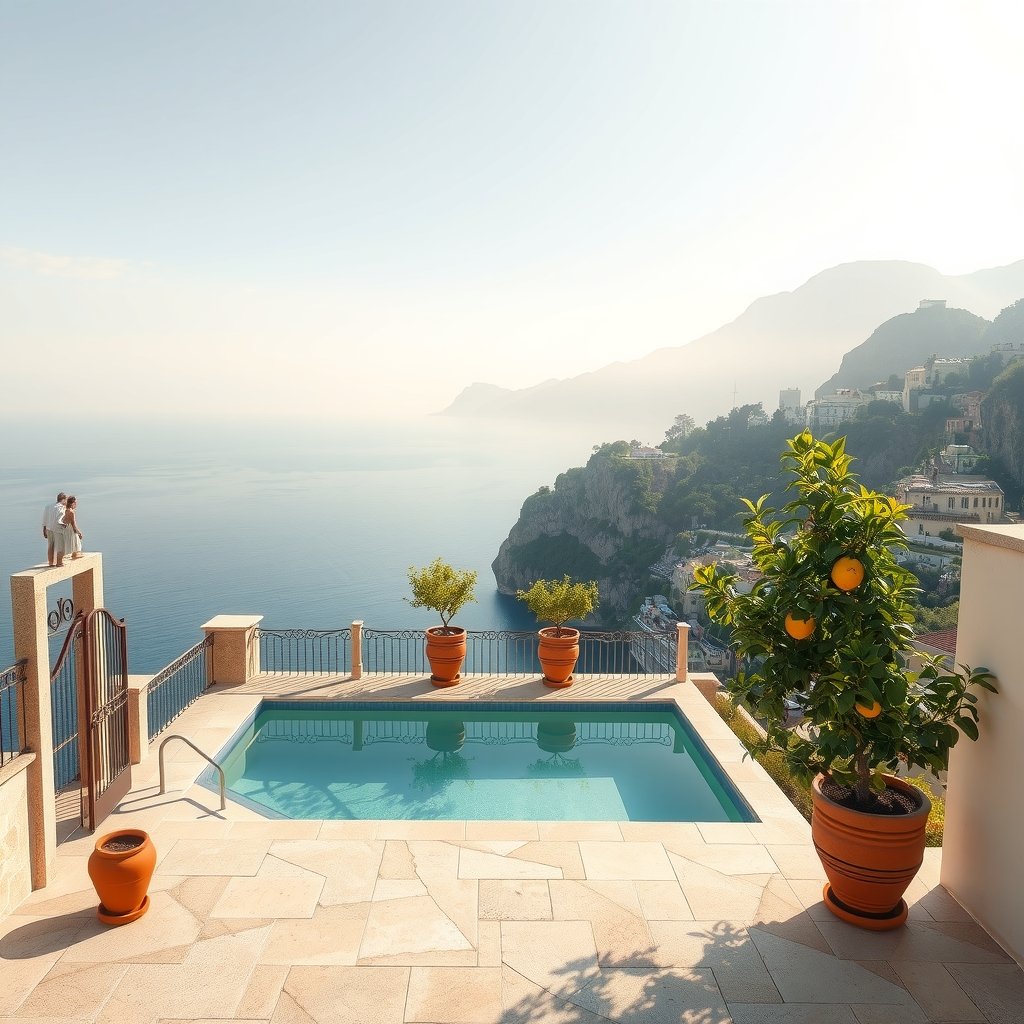
Not every private honeymoon needs a long-haul flight. Italy’s villa rental market offers staffed properties with pools, terraces, and gates that shut out the world. On the Amalfi Coast, a villa above Positano can feel remote even in August, and on Lake Como, lakeside estates with private docks deliver the same effect.
The mistake couples make is renting a villa in town and expecting seclusion. Location within the property matters more than the property itself. A villa on a main road with a shared driveway is not private, no matter how beautiful the interior.
Italy also rewards couples who travel in shoulder season. May and October bring quieter streets, lower rates, and better access to restaurants that would otherwise be booked out. For couples building a broader wardrobe for a long trip, the guide to quiet luxury brands for timeless wardrobes is a useful packing reference.
Japan: ryokan with private onsen
Japan offers a different kind of privacy: the ryokan, a traditional inn where meals are served in your room and the onsen (hot spring bath) can be reserved privately. In-room private onsen are a documented ryokan category, and they solve the main friction of Japanese hot springs, which are usually communal and gender-separated.
The Japan National Tourism Organization publishes official guidance on ryokan etiquette, including tattoo policies and bathing customs, which vary by property. Couples should confirm private bath availability at booking, since only some rooms include one.
What works in practice: book a two-night stay rather than one. A single night in a ryokan is rushed, and the point of the format is slowing down. Add a city stay in Kyoto or Tokyo afterward for contrast.
What to check before you book
Privacy claims are rarely independently audited, so treat them as promotional until verified. A short checklist prevents most disappointments:
- Villa count and site plan. Ask for the resort map and count how many villas share your beach.
- Event policy. Confirm whether the property hosts weddings or corporate groups during your dates.
- Day-guest access. Some resorts sell day passes, which changes the atmosphere entirely.
- Transfer privacy. Shared speedboats and shuttle buses undercut the arrival experience.
- Butler ratio. A butler serving twenty villas is a concierge, not a butler.
Couples planning a longer trip that mixes honeymoon with hiking or city time may also want practical gear advice, such as this guide to hiking hats for sun protection, since many of these destinations involve strong equatorial sun.
How to choose between them
The right destination depends on what privacy means to you. If it means physical separation in water, the Maldives and Bora Bora win. If it means legal limits on crowds, Bhutan and the Seychelles are unmatched. If it means wilderness without other vehicles, a Kenyan conservancy is the answer. If it means a gate, a pool, and a view, an Italian villa delivers for a fraction of the cost.
Budget also reshapes the list. Island resorts in the Seychelles and French Polynesia carry the highest total cost once transfers are included, while Italian villas and Japanese ryokan offer strong privacy per dollar. Safari costs swing sharply by season, and Bhutan’s fees are fixed regardless of when you travel.
One underrated factor is trip length. Privacy-focused destinations reward longer stays. A three-night Maldives trip is mostly logistics; a seven-night stay is where the silence actually settles in. Couples with ten days or more should consider combining two destinations, such as a safari followed by a beach, which is a common and effective pattern.
Conclusion
Privacy on a honeymoon is not a luxury upgrade you can buy at checkout. It comes from choosing properties built around low density, destinations with rules that limit crowds, and villas positioned away from the busiest corners of a resort. The Maldives, Seychelles, Bora Bora, Bhutan, Kenya’s conservancies, Italy’s villa country, and Japan’s private onsen ryokan each solve the problem differently, and each rewards couples who ask specific questions before booking.
The single most useful habit is to verify rather than assume. Ask for villa counts, event policies, and transfer details in writing. The resorts that answer clearly are usually the ones that can genuinely deliver the quiet you are paying for.
FAQ
What is the most private honeymoon destination overall?
Bhutan and the Seychelles are the strongest choices if privacy means limited crowds and low development density. Bhutan caps visitor numbers through its Sustainable Development Fee, and Seychelles planning rules restrict building on small islands. For water-based privacy, a low-villa-count Maldives resort is hard to beat.
Is an overwater villa more private than a beach villa?
Usually yes, because overwater villas are separated by water and reached by individual jetty walkways. However, villas in the middle of a long pontoon can feel exposed. End-of-pontoon villas and beach villas with private pools and garden walls often offer the best combination of space and seclusion.
How much does a private-island honeymoon cost?
Private-island resorts in the Seychelles and French Polynesia are typically the most expensive option once transfers are included, since light aircraft and boat transfers add significant cost. Maldives overwater villas vary widely by villa count and season. Italian villa rentals often deliver strong privacy for less, especially in shoulder season.
When is the best time to book for privacy?
Shoulder season is the reliable answer in most destinations. May and October in Italy, and the periods just outside peak season in the Maldives and French Polynesia, bring fewer guests and lower rates. For safari, avoid peak migration months if you want low vehicle density around sightings.
Do private conservancies in Kenya really limit other vehicles?
Yes, that is their main advantage. Conservancies adjacent to national parks typically cap the number of vehicles at a sighting, allow off-road and night drives, and host only a small number of camps. Always confirm current rules with the relevant park authority, since regulations and fees change.
What should couples ask before booking a “private” resort?
Ask for the villa count, the site map, the event and day-guest policy, and the transfer arrangements. Also ask how many villas each butler serves. Resorts that answer these questions promptly and specifically are usually the ones whose privacy claims hold up in practice.