
Botswana has built its reputation on a simple idea: fewer people, wilder places. The country’s Okavango Delta became the 1,000th site inscribed on the UNESCO World Heritage List, a milestone that reflects just how rare this inland water system is. Unlike crowded safari destinations where dozens of vehicles circle a single lion, Botswana’s best lodges sit in private concessions where guest numbers are capped and the wilderness does most of the talking. That model shapes everything about a luxury safari here, from the price tag to the silence at sundown.
What Makes Botswana’s Safari Lodges Different
Botswana has long favored a low-volume, high-value tourism model. Instead of packing parks with camps, the government leases land in private concessions, and operators agree to strict limits on beds and vehicles. The result is a safari where you rarely see another game drive vehicle.
The trade-off is cost. Botswana is one of Africa’s most expensive safari destinations, and its top lodges reflect that. But travelers who book well understand what they are paying for: exclusivity, expert guides, and access to landscapes that stay genuinely wild.
The main safari regions each offer something distinct:
| Region | Best For | Signature Experience |
|---|---|---|
| Okavango Delta | Water-based safari, birdlife | Mokoro (canoe) rides through reeds |
| Moremi Game Reserve | Big game, classic game drives | Predator sightings in a protected reserve |
| Chobe National Park | Elephants | River cruises past large herds |
| Linyanti and Selinda | Privacy, exclusivity | Private concessions with few guests |
| Central Kalahari | Remote desert safari | Black-maned lions, green-season plains |
| Makgadikgadi Pans | Quirky, unusual experiences | Meerkats and seasonal zebra migration |
The Okavango Delta: Botswana’s Flagship Safari Destination
The Okavango Delta is the heart of Botswana’s safari industry. A river that never reaches the sea instead fans out across the Kalahari sand and disappears into the earth, creating a maze of channels, lagoons, and islands. Its floodwaters arrive during the dry winter months, which means prime safari season coincides with lush water landscapes.
Mombo Camp
Mombo, on Chief’s Island in the Moremi Game Reserve, is one of Africa’s most celebrated camps. It sits in prime predator territory, and sightings of lion and leopard are common. The camp is known for its conservation record, including reintroducing rhino to the area. It is also among the most expensive stays in Botswana, so it suits travelers who want a bucket-list experience rather than a budget-conscious trip.
Vumbura Plains
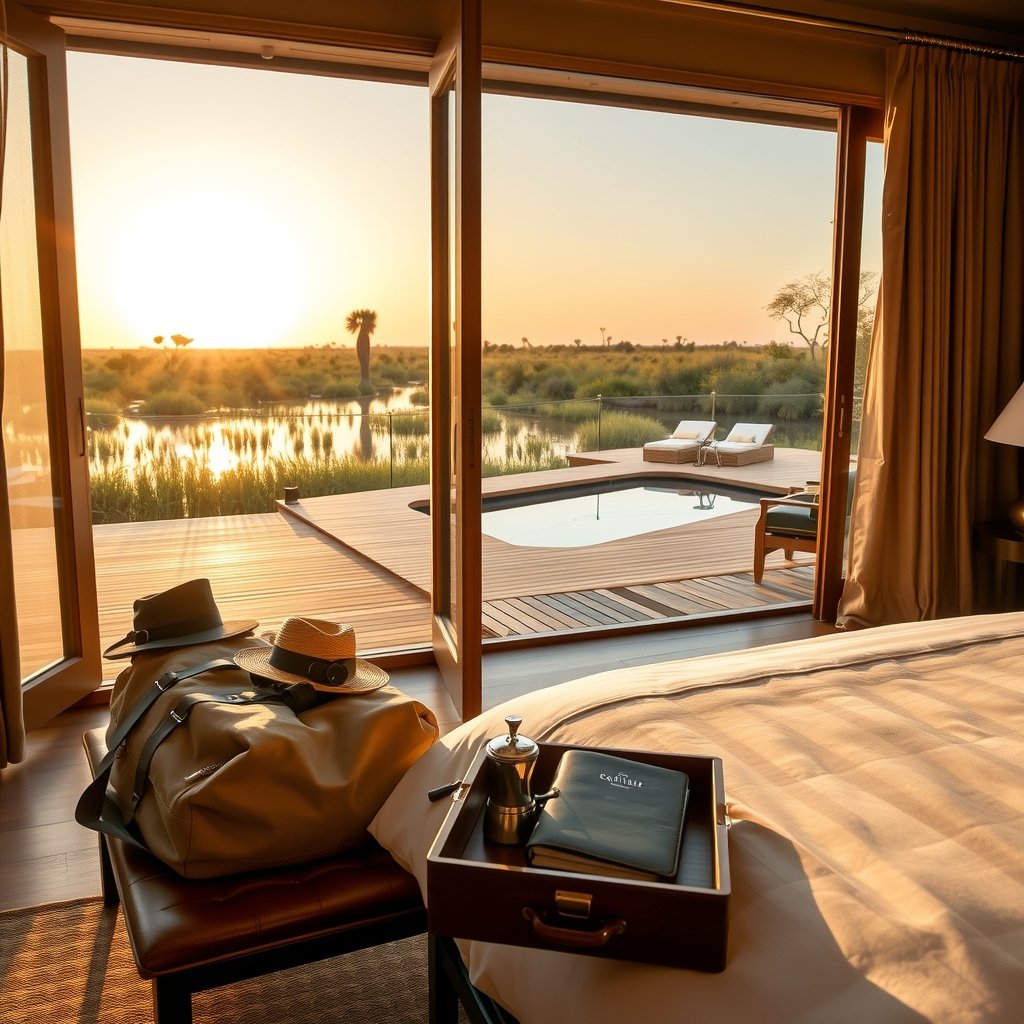
Vumbura Plains combines land and water activities in a private concession north of the Delta. Guests can take game drives, boat cruises, and mokoro excursions depending on the season. The camp’s design leans contemporary, with wide decks and plunge pools that appeal to travelers who want comfort between drives.
Jao Camp
Jao sits in a private concession where seasonal flooding transforms the landscape. Its water-based activities are a highlight, and the camp pairs them with strong guiding. For travelers who want the Delta’s watery side without sacrificing luxury, Jao is a reliable choice.
Xigera Safari Lodge
Xigera reopened after a major rebuild and quickly became one of the Delta’s most design-forward lodges. It emphasizes art, craft, and a lighter environmental footprint. The camp offers a mix of water and land activities and suits travelers who care as much about architecture as about wildlife.
Moremi Game Reserve and the Classic Safari Experience
Moremi protects part of the Delta and is one of the best places in Botswana for big game. Because it is a reserve rather than a private concession, it sees more visitors than the surrounding concessions, but the wildlife density is high and the scenery is superb.
Lodges in and around Moremi tend to offer classic game drives with a mix of water activities. Travelers who want a balanced safari with reliable predator sightings often base themselves here. It is also a practical choice for first-time visitors, since the reserve’s road network and camps make it easier to combine with other regions.
One tip from experienced safari-goers: do not overpack your itinerary. Botswana’s camps are small, flights between them are short but frequent, and light luggage limits apply. Two or three camps in a week is usually plenty. If you are building a broader travel plan around the trip, a good morning routine for productive living helps you adjust to early wake-ups and long days in the bush.
Chobe National Park and the Linyanti: Elephants and Exclusivity
Chobe is famous for its elephants, especially along the Chobe River during the dry season. The park is larger and busier than the Delta’s private concessions, but the riverfront experience is hard to beat. Boat cruises let travelers watch herds cross the water at close range.
For a quieter version of Chobe, look to the Linyanti, Selinda, and Kwando concessions on the park’s western edge. These private areas offer excellent wildlife viewing with far fewer vehicles. They are a strong choice for travelers who want the elephant experience without the crowds.
The Kalahari and Makgadikgadi: Botswana’s Desert Safari
Not every luxury safari in Botswana involves water. The Central Kalahari Game Reserve is one of the largest protected areas in Africa, and it offers a very different experience: wide open plains, silent nights, and predator sightings without another vehicle in sight. The green season, roughly from November to March, transforms the desert into a place of grass and newborn animals, and many travelers consider it the best time to visit.
The Makgadikgadi Pans add a surreal note to any itinerary. These salt pans stretch to the horizon, and the area is known for meerkat encounters and a seasonal zebra migration. Lodges here tend to be small and design-led, and they work well as a contrast to a Delta camp.
How to Choose the Right Lodge
Choosing among Botswana’s luxury lodges comes down to a few practical questions.
- What do you want to do? Water activities, game drives, walking safaris, and desert experiences point to different regions.
- When are you traveling? Peak season is roughly June to October, when wildlife concentrates around water. The green season offers lower rates and dramatic skies.
- How much privacy do you need? Private concessions cost more but deliver far fewer vehicles and guests.
- What is your budget? Botswana’s top lodges are expensive, and rates often include meals, activities, and drinks. Compare what is included rather than only the nightly rate.
- How much travel can you handle? Light aircraft transfers are part of the experience, but they add cost and time.
A common mistake is booking the cheapest lodge in an expensive region. In Botswana, the difference between a mid-range and a top camp often comes down to guiding, the concession, and guest numbers, rather than the thread count of the sheets. Another mistake is treating a safari like a beach holiday: days start early, and rest matters. Travelers who plan a slower pace enjoy the experience far more, a principle that also applies to workout routines for beginners and any other habit built on consistency.
Packing and Practical Tips for a Botswana Safari
Botswana’s safari dress code is practical rather than glamorous. Neutral colors, layers, and a good hat matter more than fashion. Evenings can be cold in the dry season, and mornings on an open vehicle are chilly.
For travelers who like to look put-together without overpacking, the best affordable luxury clothing brands offer durable pieces that work for travel. A packing list built around a camping gear checklist can also help, since safari lodges often expect guests to bring their own binoculars, sun protection, and layers.
Photography is another consideration. The light in Botswana is extraordinary, and a good camera plus editing tools make a difference. Guides often know the best photo editing software workflows for safari images, and travelers who want to sketch or journal in camp can explore free drawing software before the trip. If the safari is part of a longer journey, it pairs well with the best places to visit in spring or a stay in a modern cabin for a quieter contrast afterward.
What Luxury Actually Means in Botswana
Luxury in Botswana is not about marble bathrooms. It is about a guide who has spent years reading tracks, a camp with only eight guests, and a concession where the animals set the schedule. The best lodges invest in conservation and community partnerships, and travelers increasingly ask about those commitments before booking.
That is why the country’s tourism board regulates operators and why UNESCO recognition matters. Travelers who want to verify a lodge’s credentials can check the Botswana Tourism Organisation for licensing and current listings, and the UNESCO World Heritage Centre for information on the Okavango Delta’s protected status. The International Union for Conservation of Nature also publishes resources on protected areas and conservation that help travelers understand what they are supporting.
Conclusion
Botswana’s best luxury safari lodges share a common thread: they protect wild places and limit the number of people who experience them. The Okavango Delta remains the flagship, with camps like Mombo, Vumbura Plains, Jao, and Xigera setting the standard. Moremi offers classic big-game safari, Chobe and the Linyanti deliver elephants and exclusivity, and the Kalahari and Makgadikgadi add desert drama. The right choice depends on season, budget, and how much privacy you want. Book early, pack light, and let the wilderness set the pace.
What is the best time to visit Botswana for a luxury safari?
Peak season runs roughly from June to October, when the dry winter concentrates wildlife around water sources and the Delta flood arrives. The green season, from about November to March, brings lower rates, dramatic skies, and excellent birdlife. Travelers who want the classic experience should book peak season well in advance.
How much does a luxury safari lodge in Botswana cost?
Botswana is one of Africa’s most expensive safari destinations. Top lodges often charge premium rates that typically include meals, activities, and local drinks. Prices vary widely by camp, season, and concession, so travelers should compare what is included rather than the nightly rate alone.
Which region is best for first-time safari travelers?
The Okavango Delta and Moremi Game Reserve are the most popular choices for first-timers. They combine reliable wildlife viewing with a mix of water and land activities. Chobe is a strong addition for elephants, and the Kalahari suits travelers who want a quieter, more remote experience.
Do Botswana safari lodges include flights and transfers?
Most luxury lodges do not include international flights, but many packages cover light aircraft transfers between camps. These small-plane hops are part of the experience and add to the cost. Travelers should confirm exactly what a quote includes before booking.
Is Botswana a good destination for families?
Yes, though not every lodge welcomes young children. Many camps offer family rooms and tailored activities, while others set minimum age limits for safety on game drives. Families should ask about age policies and private vehicle options when planning.
What should travelers pack for a Botswana safari?
Neutral-colored clothing, layers for cold mornings, a wide-brimmed hat, sun protection, binoculars, and a good camera are essentials. Luggage limits on light aircraft are strict, so soft bags and a compact packing list work best.
The country rewards travelers who plan thoughtfully and choose camps that match their interests rather than simply chasing the most famous names. Whether the goal is photographing elephants at the Chobe River, drifting through papyrus channels in the Delta, or watching lions on the Kalahari plains, Botswana’s luxury lodges make the wild accessible without taming it. For many visitors, the trip becomes less a holiday than a reset — a reminder of how much the natural world still offers. Book with care, travel lightly, and leave room for the unexpected sightings that make a safari unforgettable.